
The Real Legacy of Bitcoin Pizza Day: Crypto Payments Still Aren't Solved
Bitcoin Pizza Day is often seen as a meme, but it was the first real Bitcoin payment. In 2026, it still asks one question: Is crypto usable money or just something to hold?

Key Takeaways
- Bitcoin Pizza Day was the first documented real-world crypto payment, not just a symbolic event.
- The crypto ecosystem has evolved into two layers: Bitcoin as a store of value and stablecoins as payment instruments.
- The main challenge today is not crypto ownership, but the friction involved in spending crypto in real life.
Bitcoin Pizza Day is widely remembered as one of the most iconic moments in crypto history, when 10,000 BTC were used to purchase two pizzas in 2010.Over time, it has become a cultural reference point — often used to illustrate Bitcoin's dramatic price appreciation and long-term value creation. However, the deeper meaning behind that transaction is frequently overlooked.
Beyond the meme and the valuation comparisons, Bitcoin Pizza Day represents something more fundamental: the first real-world attempt to use crypto as a payment method.
In 2026, this moment still matters, not because of how much those pizzas would be worth today, but because it highlights a question the industry has not fully resolved: whether crypto payments have truly reached real-world usability.
Was Bitcoin Pizza Day Really About Pizza?
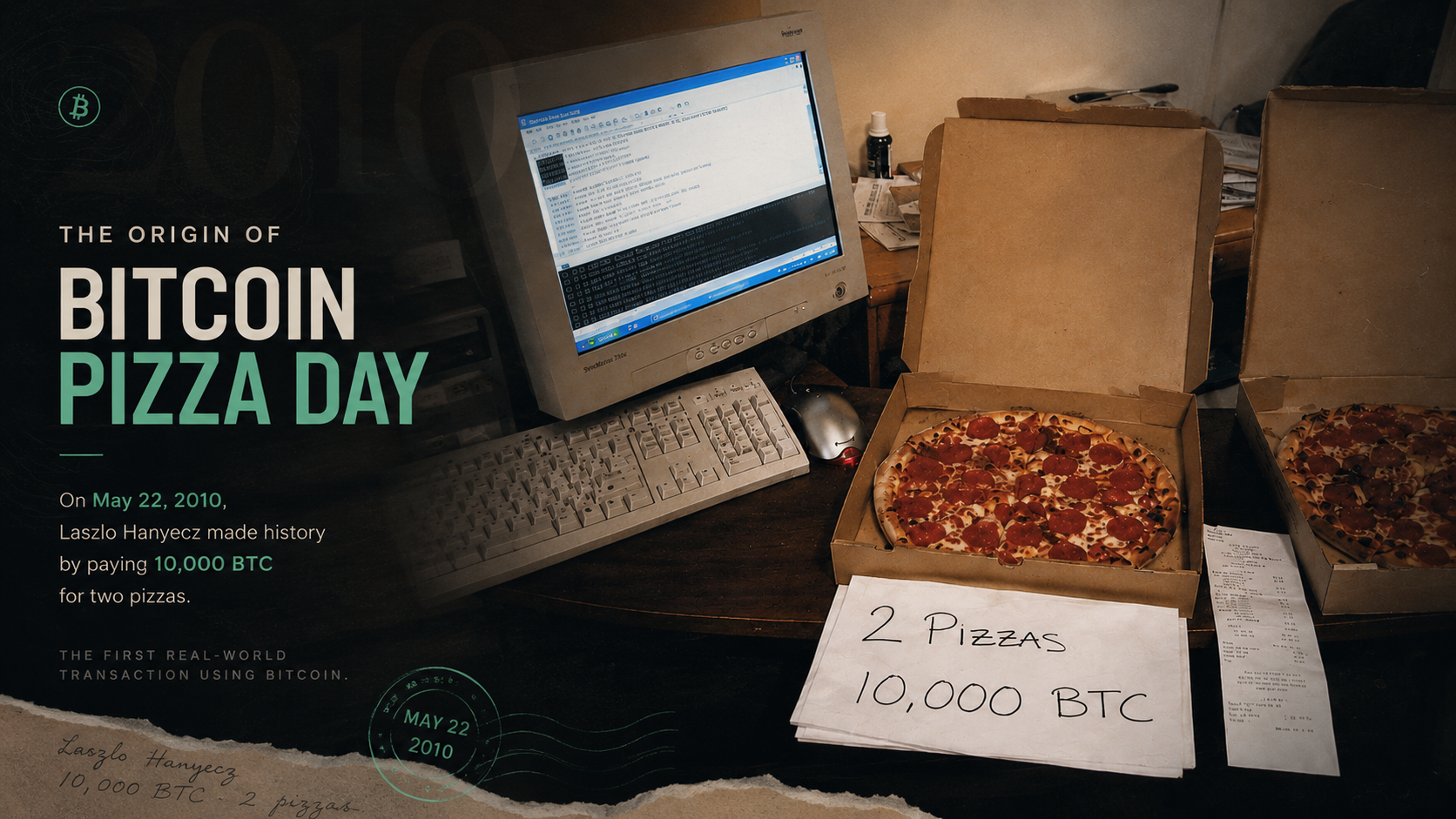
On May 22, 2010, Laszlo Hanyecz completed a transaction that would later become one of the most referenced moments in crypto history by paying 10,000 BTC for two pizzas.
At the time, Bitcoin had no established market price, and the transaction was not viewed through the lens of financial consequence. Instead, it was an early experiment in whether digital assets could function as a medium of exchange for physical goods.
In hindsight, this moment is often reduced to a meme or a price comparison exercise. Yet its true significance lies in something more structural: it was the first visible bridge between Bitcoin and real-world economic activity.
Why Did Bitcoin Stop Being Used as Everyday Money?
Bitcoin was originally designed as peer-to-peer electronic cash, intended to enable direct transactions without intermediaries.
However, as adoption increased and Bitcoin’s value rose significantly, its role began to shift. Rather than being used for daily payments, it increasingly became an asset that users preferred to hold rather than spend.
This shift was driven less by technical limitations and more by behavioral and economic incentives. As Bitcoin appreciated in value, spending it became less attractive, especially when its long-term potential as a store of value became more widely recognized.
Over time, Bitcoin transitioned into what is now commonly referred to as “digital gold,” a narrative that naturally reduced its usage in everyday transactions.
What Actually Powers Crypto Payments in 2026?
While Bitcoin moved away from its original payment narrative, crypto payments themselves continued to evolve in a different direction.
Today, stablecoins have become the dominant medium for transactional use cases, particularly in areas such as cross-border transfers, freelancer payments, creator economy settlements, and fintech-integrated payment systems.
\Unlike volatile assets, stablecoins provide pricing stability, which makes them more suitable for real-world commerce.
However, despite this evolution, crypto payments still face structural friction. The process of spending crypto often involves multiple steps, including conversions, platform dependencies, and inconsistent merchant support.
As a result, crypto remains widely held but not yet seamlessly usable in everyday life.
What Does the Bitcoin Pizza Day Index Reveal in 2026?
Most interpretations of Bitcoin Pizza Day focus on valuation — specifically how much 10,000 BTC would be worth today.
While this perspective highlights Bitcoin's long-term price appreciation, it does not fully capture the broader picture of crypto usage across different regions.
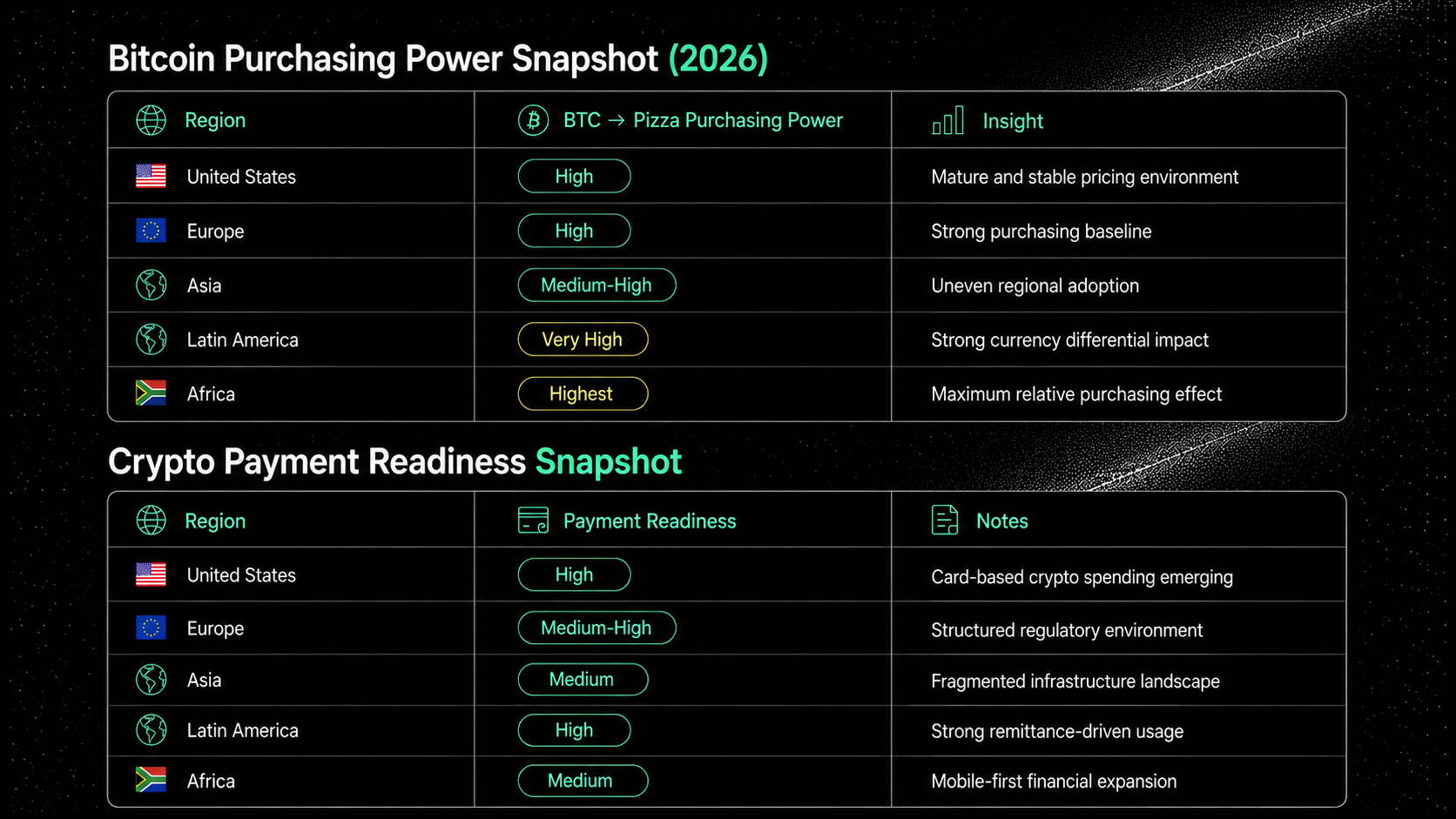
A more complete view includes both purchasing power and payment readiness.
This perspective shows how Bitcoin's perceived value varies significantly depending on local economic conditions.
This layer highlights a more important question than valuation alone: how easily crypto can actually be used in real-world transactions.
Together, these two perspectives reveal a structural gap between ownership and usability.
What Is Still Missing Between Holding and Using Crypto?
At this stage of crypto adoption, the primary limitation is no longer access to digital assets, but the ability to use them seamlessly in real-world scenarios.
While ownership has become increasingly simple, spending crypto still requires navigating conversion steps, fragmented systems, and inconsistent payment pathways.
This creates a persistent gap between holding crypto and using crypto, which remains one of the core challenges in the ecosystem today.
How Is This Gap Being Addressed?
Across the industry, different solutions are emerging to reduce friction between digital assets and real-world spending.
Some focus on stablecoin infrastructure, while others explore card-based payment systems or integrated wallet ecosystems.
In this broader landscape, platforms such as Cwallet are part of an evolving effort to make crypto more usable beyond trading and holding, focusing on practical interactions between users and their digital assets.
Within this context, solutions like Cozy Card represent an example of how crypto can be connected more directly to everyday spending scenarios, enabling users to bridge the gap between digital balances and real-world payments in a more intuitive way.
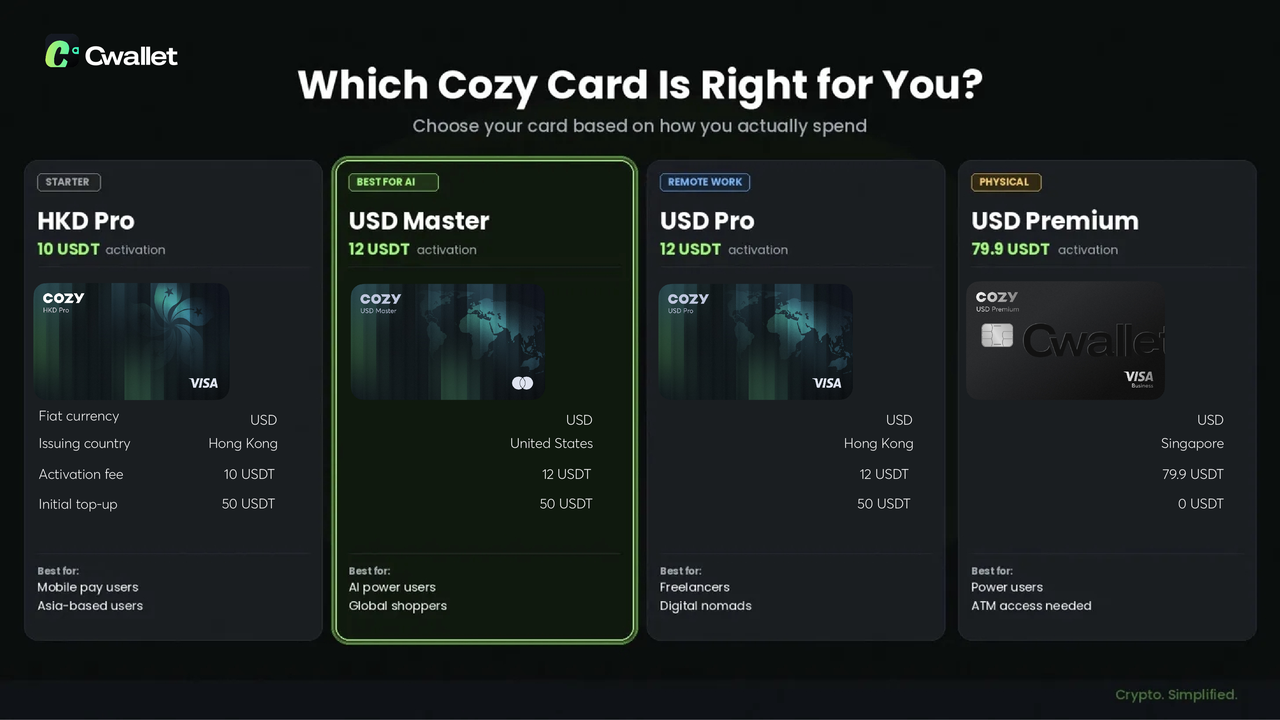
Rather than positioning this as a standalone breakthrough, it should be understood as part of a broader industry shift toward improving crypto usability.
⭐️ Recommend to Read: $2,600 a Year on Subscriptions? Here's How Crypto Users Pay Smarter with Cozy Card
What Does Bitcoin Pizza Day Actually Mean Today?
Bitcoin Pizza Day is often treated as a historical anecdote or cultural meme, but its meaning has evolved alongside the industry itself.
It now represents something more important than valuation narratives or humorous retrospectives. It represents an early attempt to answer a question that is still relevant today: whether crypto can function as practical money in everyday life.
In this sense, the event is not about the price of pizza, but about the ongoing evolution of financial systems that aim to connect digital assets with real-world utility.
Bitcoin successfully demonstrated that crypto can hold value at scale, but the question of usability remains open.
Final Thought
The legacy of Bitcoin Pizza Day is not defined by how expensive those pizzas would be today, but by the fact that they marked the first real attempt to use crypto in a physical economy.
More than a decade later, the industry has made significant progress, yet the core question remains unresolved: whether crypto payments can become as seamless and natural as the vision that originally inspired them.
In 2026, Bitcoin Pizza Day is no longer just a historical reference — it is a reminder that the evolution of crypto payments is still ongoing, and that the next phase of innovation will be defined by how effectively the gap between holding and using crypto is finally closed.
Cwallet: Your All-in-One Crypto Solution
Cwallet allows you to store, trade, and manage 1,000+ cryptocurrencies across 60+ blockchains, offering flexibility for both Spot Trading and Futures Trading. With features like Perpetual Trading, Cozy Card, and more, Cwallet empowers you to make the most of your crypto journey.
Join the Community & Earn More
Trade daily, earn more. Cwallet's Telegram and Discord communities host regular trading challenges across Market Battle, Trend Trade, 1001X, and Tap Grid, with extra rewards waiting for active participants.
👉 Join us on Telegram or Discord to participate in ongoing events and claim your rewards.
Official Links
Official Site: https://cwallet.com
X: https://x.com/CwalletOfficial
Disclaimer
This content is for informational purposes only and does not constitute financial advice. Crypto assets are volatile, and all investment decisions should be based on your own research (DYOR). Cwallet assumes no liability for any losses.