
Should You Worry When Bitcoin ETF Money Flows Out?
Bitcoin ETFs lost $389.7M in one week, but JPMorgan, Morgan Stanley, and Mastercard are still expanding crypto infrastructure. Here is what the mixed signals mean.


Key Takeaways
- Bitcoin ETFs lost $389.7M from August 10–14, reversing the previous week’s $853.5M inflow.
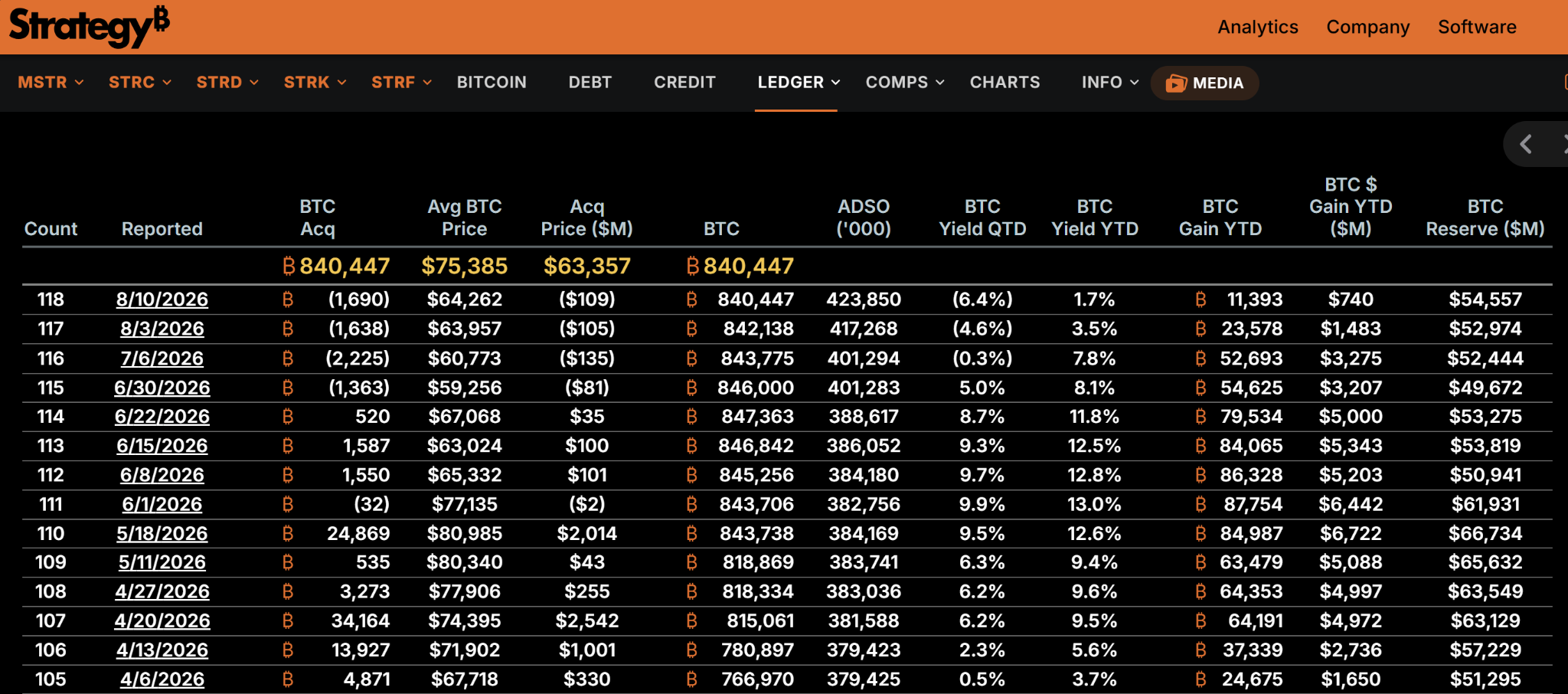
- Strategy sold 1,690 BTC, while Morgan Stanley increased its IBIT holdings.
- Short-term selling does not necessarily mean long-term institutional interest is disappearing.
What Happened to Bitcoin ETF Flows?
If you are new to crypto, ETF flows can look confusing. An exchange-traded fund, or ETF, lets investors gain exposure to Bitcoin through a traditional financial product instead of holding BTC directly.
During the week of August 10–14, U. S. spot Bitcoin ETFs recorded their largest weekly outflow in six weeks, losing $389.7 million. That reversed much of the $853.5 million they attracted during the previous week, which had been their strongest weekly inflow since April.
This is a clear sign that some investors reduced their ETF exposure. But it is not proof that every institution is leaving crypto. ETF data tracks money moving through a specific product. It does not capture every bank loan, corporate treasury position, private fund, or infrastructure investment.
Why Does One Week of Outflows Not Tell the Whole Story?
Markets often react quickly to a large number. The more useful approach is to compare short-term fund flows with longer-term institutional activity.Right now, the signals are mixed:
- ETF investors withdrew capital during a period of Bitcoin price stagnation.
- Strategy sold another 1,690 BTC for approximately $108.6 million.
- Morgan Stanley increased its holdings of BlackRock’s IBIT.
- JPMorgan began accepting Bitcoin and Ethereum as loan collateral.
These actions do not point in one direction. Some companies are selling or raising liquidity, while traditional financial institutions are creating more ways to hold and finance crypto assets.
Why Is Strategy Selling Bitcoin?
Strategy's latest sale was its fourth consecutive weekly sale, bringing its reported 2026 sales to roughly 6,916 BTC. That sounds significant, but it should be understood as a company-specific treasury and capital-structure decision rather than a universal institutional signal.
A large holder may sell to raise cash, manage financing, repurchase another security, or adjust its balance sheet. Other investors do not automatically share the same objective. This is why Strategy’s selling should be monitored, but not treated as a direct instruction for individual holders.
What Does JPMorgan's Crypto Collateral Policy Change?
JPMorgan's reported decision to accept BTC and ETH as loan collateral connects crypto with traditional credit markets. In simple terms, eligible borrowers may be able to use digital assets to support a loan rather than selling them immediately for liquidity.
This does not remove volatility or lending risk. It does show that banks are building more formal financial services around major crypto assets. Over time, that can support deeper liquidity and more established market infrastructure.
For users managing their own portfolios, Cwallet Spot Trading offers a way to manage BTC and ETH exposure from one interface. Limit orders can help users plan around their own decisions during a range-bound market, but no trading tool eliminates risk, and this article does not recommend buying or selling any asset.
What Do Morgan Stanley, Mastercard, and Kraken Signal?
The broader institutional picture becomes clearer when these developments are viewed together.
Morgan Stanley's increased IBIT position suggests that some traditional investors are still adding Bitcoin exposure even as overall ETF flows weaken. Mastercard’s reported $1.8 billion deal points to continued investment in digital-asset payment infrastructure. Meanwhile, Q2 revenue growth at Kraken parent Payward suggests that crypto platforms can continue developing their businesses during a sideways market.
These are not immediate price catalysts. They are signs that the industry’s underlying infrastructure is still expanding across:
- Investment products
- Bank lending
- Payment networks
- Trading platforms
How Should Long-Term Holders Read This Market?
The simplest conclusion is that the market is cautious, not necessarily abandoned. Short-term Bitcoin ETF outflows and Strategy’s selling create visible pressure, while institutional adoption continues through lending, payments, and investment products.
For holders who are waiting through a period of sideways movement, Cwallet Simple Earn can help eligible idle assets generate potential returns instead of remaining unused. It does not replace risk assessment or guarantee profits, but it gives users another way to manage assets while short-term market signals remain unclear. Read Cwallet Earn: Your Easiest Way to Get Passive Income from Crypto to learn more.
The market is sending two messages at once: capital is leaving some Bitcoin ETFs, but traditional finance is still building around crypto. For beginners, that means one week of outflows should be treated as important information, not a complete explanation of where the industry is heading.
Cwallet: Your All-in-One Crypto Solution
Cwallet allows you to store, trade, and manage 1,000+ cryptocurrencies across 60+ blockchains, offering flexibility for both Spot Trading and Futures Trading. With features like Perpetual Trading, Cozy Card, and more, Cwallet empowers you to make the most of your crypto journey.
Join the Community & Earn More
Trade daily, earn more. Cwallet's Telegram and Discord communities host regular trading challenges across Market Battle, Trend Trade, 1001X, and Tap Grid, with extra rewards waiting for active participants.
👉 Join us on Telegram or Discord to participate in ongoing events and claim your rewards.
Official Links
Official Site: https://cwallet.com
X: https://x.com/CwalletOfficial
Disclaimer
This content is for informational purposes only and does not constitute financial advice. Crypto assets are volatile, and all investment decisions should be based on your own research (DYOR). Cwallet assumes no liability for any losses.