
Why Is ZetaChain Leaving Its Own Blockchain to Focus on AI?
ZetaChain approved a plan to wind down its L1 and migrate ZETA to Solana. Here’s why private AI, Anuma, and AI-agent infrastructure are central.

Key Takeaway
- ZetaChain approved a plan to wind down its L1 and migrate ZETA to Solana—but the transition is not complete.
- The project is shifting its focus to Anuma, private AI, and its Private Memory Layer.
- ZetaChain says Solana offers stronger infrastructure for AI agents, identity, and payments.
A blockchain voting to wind down its own Layer 1 can look like a retreat. ZetaChain is framing it as a strategic reset: less focus on operating standalone infrastructure and more focus on private AI applications on Solana.
ZetaChain governance Proposal 68 passed with 99.4% support and about 58% participation, above the required 40% quorum. It approved a planned wind-down of the Cosmos-based ZetaChain L1 and a planned ZETA migration to Solana. Neither process is complete.
The key question is why ZetaChain believes private AI, user-controlled memory, and AI-agent infrastructure now deserve more attention than maintaining an independent blockchain.
ZetaChain Is Changing Its Center of Gravity
ZetaChain began in 2021 as a cross-chain infrastructure project. Its original goal was to connect blockchains and make multi-chain applications easier to build and use.
The project now says its strongest product opportunity is its Private Memory Layer. ZetaChain describes it as one encrypted memory layer that can follow a user across AI models, applications, and agents, while the user controls keys and permissions.
Put simply, instead of starting from scratch each time a person uses a new AI app, ZetaChain private AI aims to let approved context move between services. The planned ZetaChain L1 wind-down reflects a shift from running independent base-layer infrastructure to building an application-layer product around memory, identity, and AI.
What Is Anuma, ZetaChain's Private AI App?
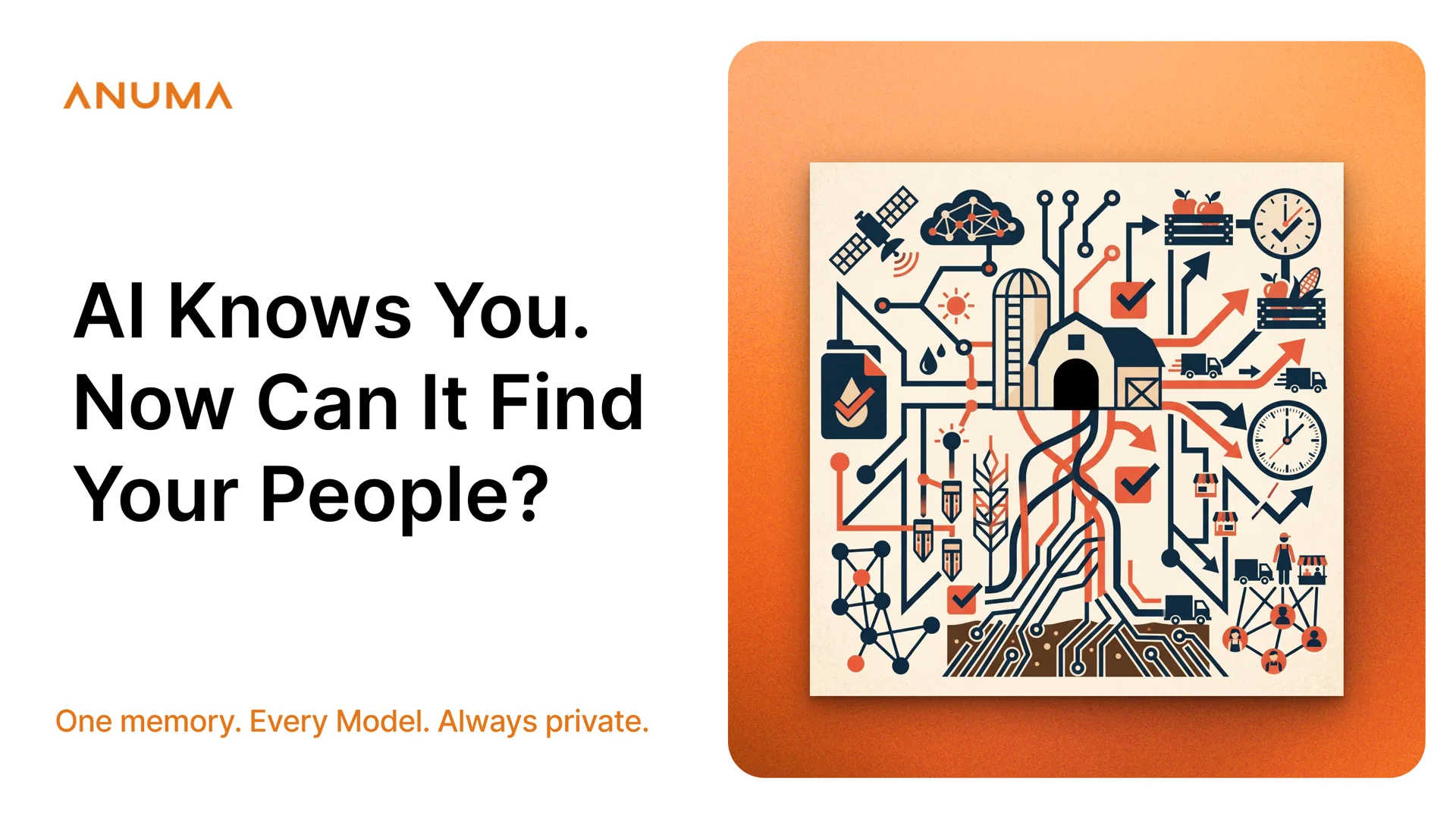
Anuma is ZetaChain’s private multi-model AI app, powered by the Private Memory Layer.
According to ZetaChain, Anuma has gained more than 300,000 users since February, processed more than 1 million requests, and supports 35 AI models. These are project-reported figures, not independently verified adoption data.
ZetaChain Anuma is built around the idea of one AI memory layer across models, apps, and agents. ZetaChain says users can decide what information different services may access, rather than giving every model the same context.
That makes Anuma more than a model-selection interface. The project is positioning it as a private AI app where memory, permissions, and user control are core features. ZetaChain’s privacy and encryption claims are the project’s own descriptions, not guarantees.
Why Is ZetaChain Moving to Solana?
ZetaChain says Solana better fits the needs of consumer-facing AI apps and AI agents.
AI agents are systems designed to perform tasks over time. To do that, they may need persistent memory, user permissions, identity, and ways to make payments for services or data. ZetaChain argues Solana offers a stronger environment for those components.
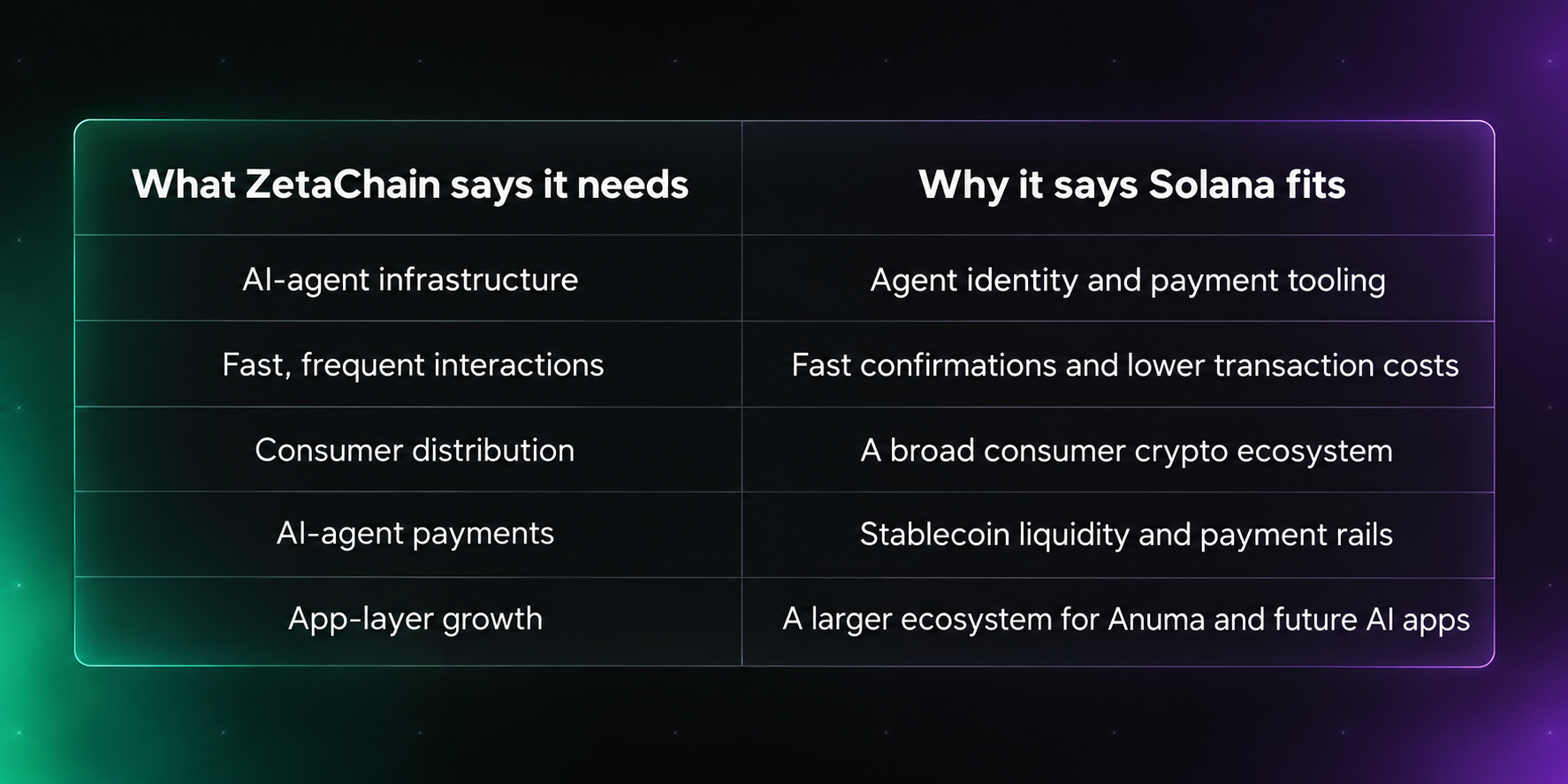
ZetaChain cites Solana's Agent Registry and x402 payment rails as examples relevant to AI agents on Solana. It also points to Solana’s consumer ecosystem, stablecoin liquidity, and transaction performance.
According to ZetaChain, each Anuma account is a wallet, and the planned move could bring more than 300,000 Anuma users to Solana. This is ZetaChain’s strategic thesis, not a guarantee of adoption or success.
What Happens to ZETA and the Existing ZetaChain L1?
Proposal 68 establishes an approved direction, not a finished ZetaChain Solana migration.The plan calls for a 1:1 ZETA migration to Solana, where ZETA is intended to become a native SPL token. The ZETA ticker and total supply are intended to remain unchanged. ZETA on Ethereum and BSC is not part of this proposal.
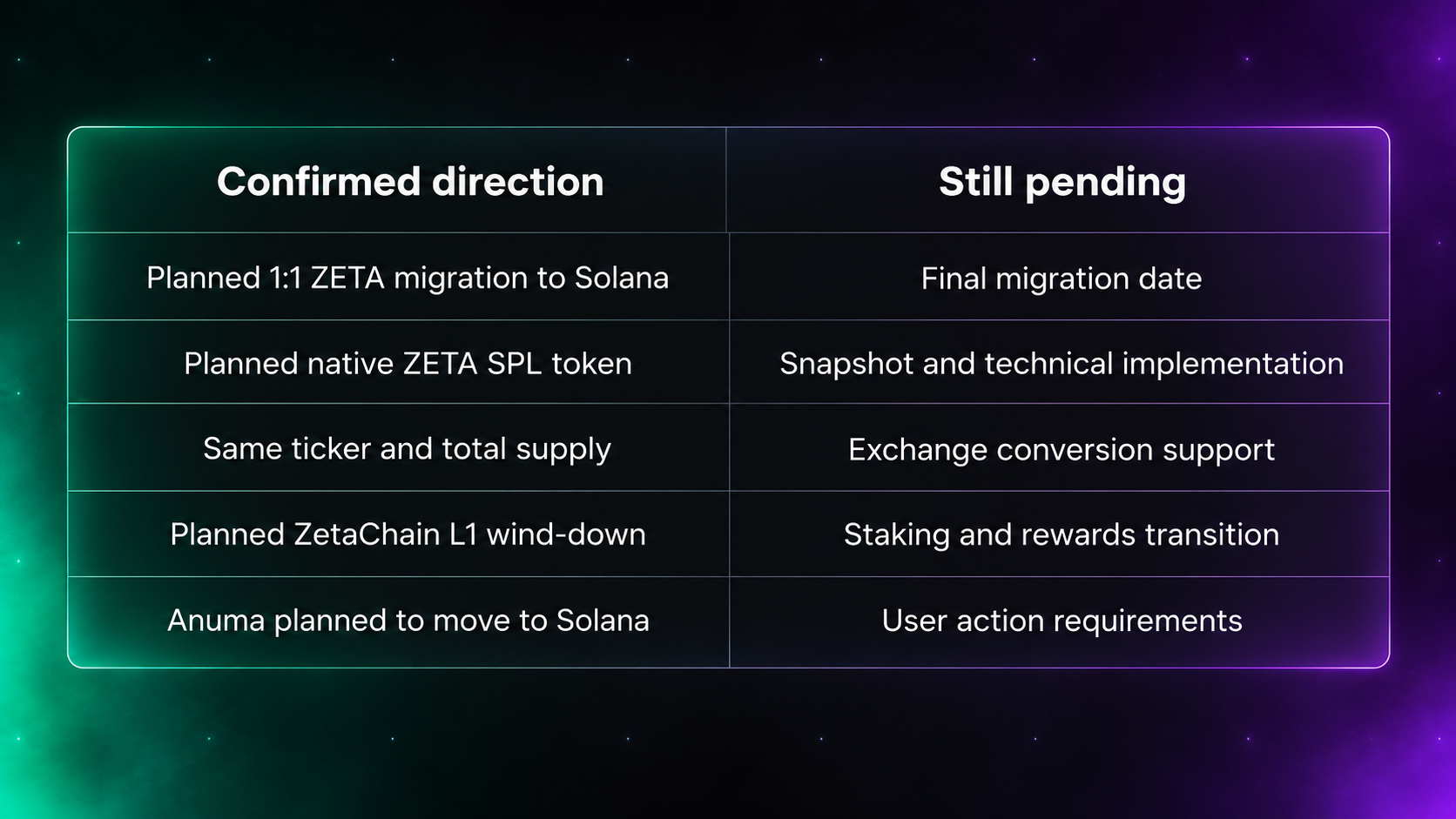
"ZetaChain shutdown" may be a common search term, but it is not the current reality. The accurate description is an approved plan to wind down the ZetaChain L1. The final timeline, snapshot details, exchange conversion support, user action requirements, and post-migration staking and rewards details are still pending.
The Bigger Bet: AI Needs More Than a Model
ZetaChain's core thesis is that useful AI agents need more than intelligence. They may also need:
- Persistent memory.
- User-controlled permissions.
- Identity.
- Payments.
- An application layer that connects these tools.
The Private Memory Layer is ZetaChain's proposed answer for portable, controlled user context. Anuma is the initial product built around it. Solana is intended to provide the surrounding environment for AI-agent infrastructure, consumer access, and payments.This is not an established outcome for AI or blockchain projects. It is the direction ZetaChain is pursuing as it shifts away from its standalone Layer 1 model.
What to Watch Next?
- The next governance proposal and execution timeline.
- The official migration date and snapshot details.
- Exchange and wallet support announcements.
- The final plan for staking and rewards.
- Anuma's move to Solana and future developer access to the application layer.
Until official instructions are published, users should avoid unofficial ZETA migration, claim, or airdrop links.
What This Means for Crypto Users
ZetaChain's approved plan reflects a wider crypto trend: projects are increasingly choosing the ecosystem that best fits their product strategy rather than maintaining every layer of infrastructure themselves. In this case, ZetaChain is shifting from its own Layer 1 toward a Solana-based approach built around private AI, user-controlled memory, and AI-agent infrastructure.
For everyday users, changes like the planned ZETA migration are a reminder that crypto is increasingly multi-chain. Tokens, apps, wallets, and user experiences can move across ecosystems—and staying aware of official updates, supported networks, and security risks becomes part of using Web3 responsibly.
This is where a multi-chain wallet experience matters. Cwallet is built to help users manage crypto across evolving blockchain ecosystems from one secure environment, while keeping everyday access to digital assets simple as the Web3 landscape changes.
Cwallet: Your All-in-One Crypto Solution
Cwallet allows you to store, trade, and manage 1,000+ cryptocurrencies across 60+ blockchains, offering flexibility for both Spot Trading and Futures Trading. With features like Perpetual Trading, Cozy Card, and more, Cwallet empowers you to make the most of your crypto journey.
Join the Community & Earn More
Trade daily, earn more. Cwallet's Telegram and Discord communities host regular trading challenges across Market Battle, Trend Trade, 1001X, and Tap Grid, with extra rewards waiting for active participants.
👉 Join us on Telegram or Discord to participate in ongoing events and claim your rewards.
Official Links
Official Site: https://cwallet.com
X: https://x.com/CwalletOfficial
Disclaimer
This content is for informational purposes only and does not constitute financial advice. Crypto assets are volatile, and all investment decisions should be based on your own research (DYOR). Cwallet assumes no liability for any losses.