
What Strategy's First Bitcoin Sale Means for the Bitcoin Narrative?
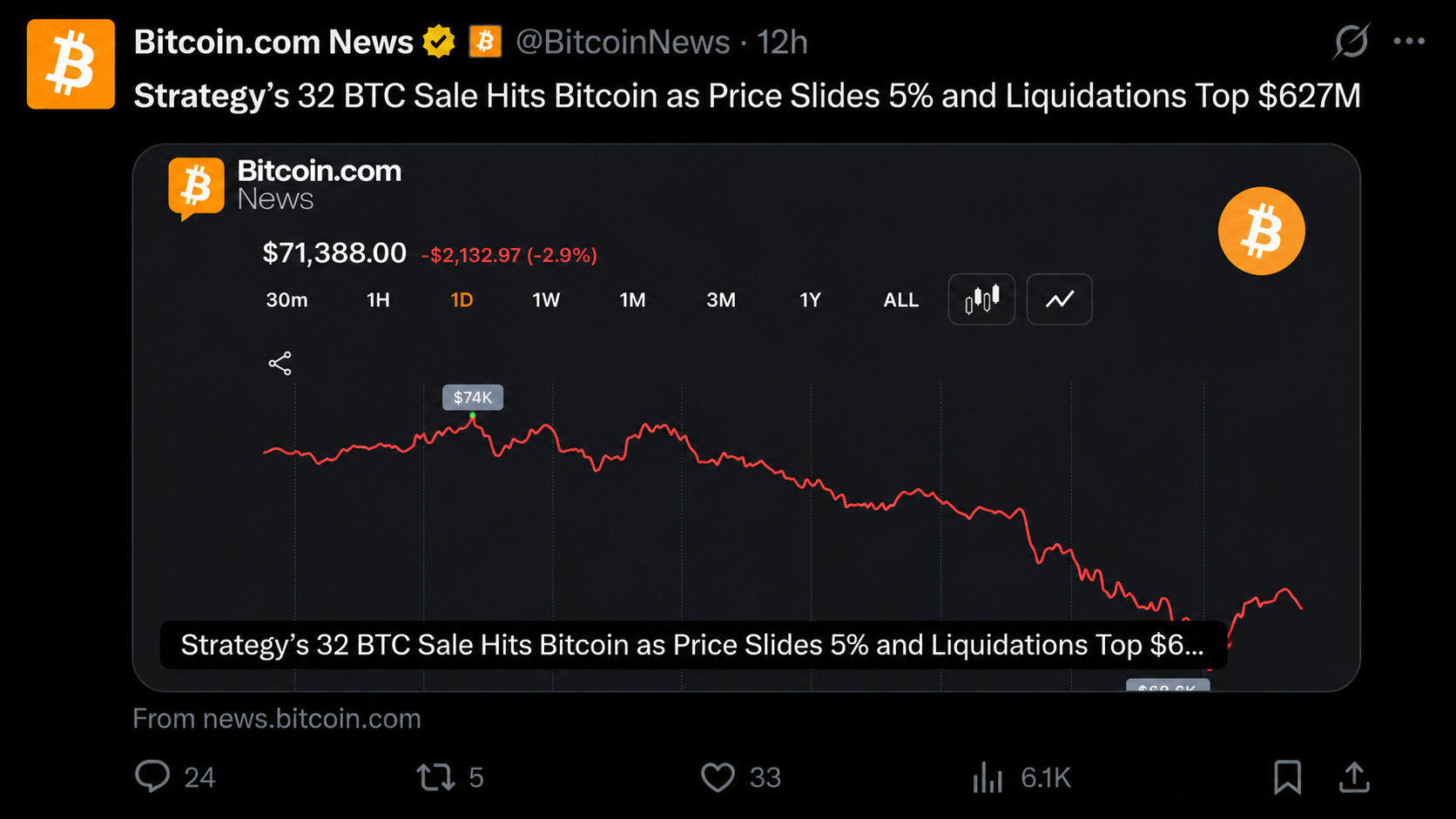
Strategy's first Bitcoin sale may have involved only 32 BTC, but it quickly sparked debate across the crypto industry.


Key Takeaways
- Strategy's sale of 32 BTC is insignificant in size but meaningful as a market signal.
- Bitcoin's muted reaction suggests traders viewed the event as treasury management rather than a bearish shift.
- The sale highlights how the Bitcoin narrative is evolving as institutional adoption matures.
For years, Strategy and Bitcoin have been almost inseparable.
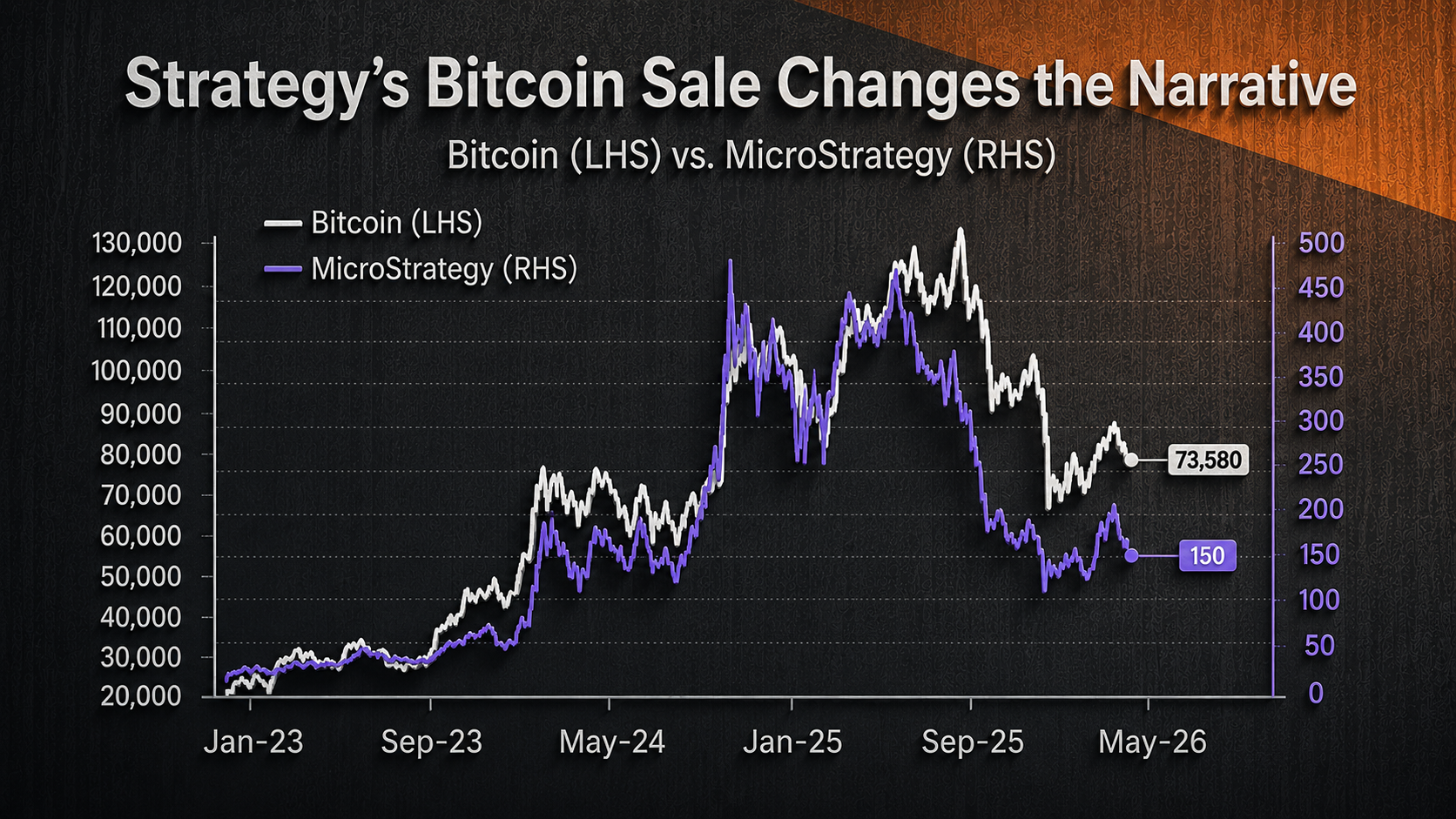
Under Michael Saylor's leadership, the company transformed itself from a traditional software business into the largest corporate Bitcoin holder in the world. Along the way, it helped establish one of crypto's most powerful narratives: buy Bitcoin, hold it, and never sell.
That is why Strategy's recent sale of 32 BTC attracted so much attention.
On paper, the transaction is almost irrelevant. Strategy still holds hundreds of thousands of Bitcoin, and 32 BTC represents only a tiny fraction of its total position. Yet the news spread quickly across crypto media and social platforms because the market wasn't reacting to the amount sold—it was reacting to what the sale seemed to represent.
For the first time, one of Bitcoin's strongest corporate advocates had demonstrated a willingness to sell.
Why Did Such a Small Sale Become a Major Story?
Markets rarely care about numbers alone. They care about signals.
If an ordinary investor sold 32 BTC, nobody would think twice about it. But when Strategy does it, the transaction carries symbolic weight because it touches a narrative that has shaped Bitcoin's institutional adoption story for years.
The sale was reportedly connected to preferred stock obligations and treasury management rather than any loss of confidence in Bitcoin itself. From a financial perspective, the decision appears practical and relatively insignificant. However, narratives often operate differently from fundamentals.
The discussion that followed was not really about the Bitcoin that left Strategy's balance sheet. It was about whether one of the industry's most enduring beliefs—"never sell Bitcoin"—had begun to evolve.
And that distinction matters.
What Did the Market's Reaction Tell Us?
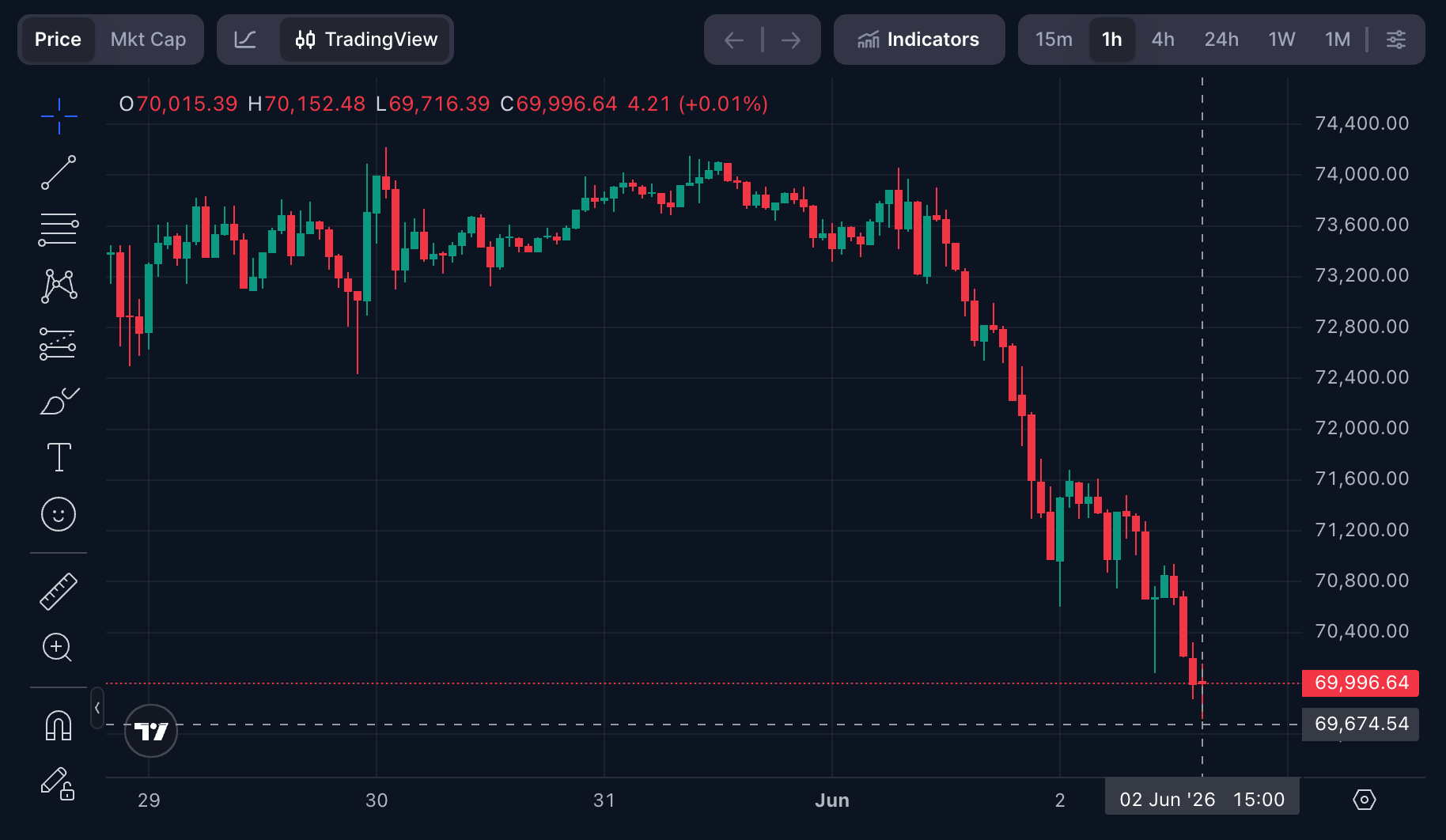
Perhaps the most interesting part of the story wasn't the sale itself but how little impact it had on Bitcoin's price.
Despite widespread discussion, the market remained relatively calm. There was no major wave of selling, no collapse in sentiment, and no indication that investors suddenly viewed Strategy's move as a reason to reassess Bitcoin's long-term outlook.
For traders, this is often one of the most important signals to watch.
When seemingly bearish news fails to produce bearish price action, it can suggest that the market has either already priced in the information or simply doesn't view it as a meaningful threat. In this case, investors appeared to interpret the sale as a treasury decision rather than a shift in conviction.
That reaction reinforces an important principle: price behavior often reveals more than headlines.
Recommend to Read: Cwallet Weekly Crypto Express | BTC Is Stuck in a Range, What Should Traders Watch Next?
Is the Bitcoin Narrative Starting to Mature?
The bigger takeaway may be that Bitcoin's narrative is becoming more sophisticated as institutional participation grows.
During earlier stages of adoption, conviction was often framed in absolute terms. Long-term holders were expected to buy, hold, and ignore everything else. Selling was frequently interpreted as weakness or a lack of belief.
Today, the landscape looks different.
As more public companies, funds, and institutional investors enter the market, Bitcoin is increasingly being treated as a strategic asset rather than a symbolic one. That means treasury management, portfolio adjustments, and capital allocation decisions become part of the equation.
Strategy's sale does not necessarily weaken the Bitcoin narrative. Instead, it may signal that the narrative is evolving from simple accumulation toward a more mature understanding of how large institutions manage assets.
In other words, conviction and flexibility no longer need to be viewed as opposites.
Recommend to Read: Top Crypto Narratives in 2026: What's Driving the Market Right Now
What Should Crypto Traders Pay Attention to Next?
Rather than focusing on whether Strategy sells another small amount of Bitcoin, traders may be better served by watching the broader trends that this event highlights.
A few questions are becoming increasingly important:
- Will institutional demand for Bitcoin continue to grow?
- How will corporate treasury strategies evolve over time?
- Does the market continue to treat Bitcoin as a long-term strategic asset?
- How do investors react when major holders make portfolio adjustments?
These questions are likely to have a much greater influence on future market structure than any individual sale.
At the same time, this episode serves as a reminder that market psychology remains one of crypto's most powerful forces. Narratives influence behavior, and behavior influences price. Understanding both is often what separates reactive traders from informed ones.
The Real Lesson Behind Strategy's Sale
The significance of Strategy's first Bitcoin sale is not measured by the 32 BTC involved.
It lies in what the event reveals about the current state of the market.
Bitcoin is no longer supported solely by ideology or long-term conviction. It is increasingly supported by institutions, financial products, treasury strategies, and a growing range of participants who approach the asset through different lenses.
That shift makes the market more complex—but also more mature.
For crypto users and traders, staying informed about these evolving narratives is becoming just as important as tracking price action itself. As a Web3 hub, Cwallet helps users navigate both sides of the market through spot trading, perpetual futures, and educational resources designed to make sense of emerging trends and industry developments.
Strategy's sale may not change Bitcoin's future.
But it does offer a useful reminder that narratives evolve, markets adapt, and sometimes the most important signals come from events that seem too small to matter.
Cwallet: Your All-in-One Crypto Solution
Cwallet allows you to store, trade, and manage 1,000+ cryptocurrencies across 60+ blockchains, offering flexibility for both Spot Trading and Futures Trading. With features like Perpetual Trading, Cozy Card, and more, Cwallet empowers you to make the most of your crypto journey.
Join the Community & Earn More
Trade daily, earn more. Cwallet's Telegram and Discord communities host regular trading challenges across Market Battle, Trend Trade, 1001X, and Tap Grid, with extra rewards waiting for active participants.
👉 Join us on Telegram or Discord to participate in ongoing events and claim your rewards.
Official Links
Official Site: https://cwallet.com
X: https://x.com/CwalletOfficial
Disclaimer
This content is for informational purposes only and does not constitute financial advice. Crypto assets are volatile, and all investment decisions should be based on your own research (DYOR). Cwallet assumes no liability for any losses.