What is CEX? Understanding the Advantages and Disadvantages of Centralized Exchanges
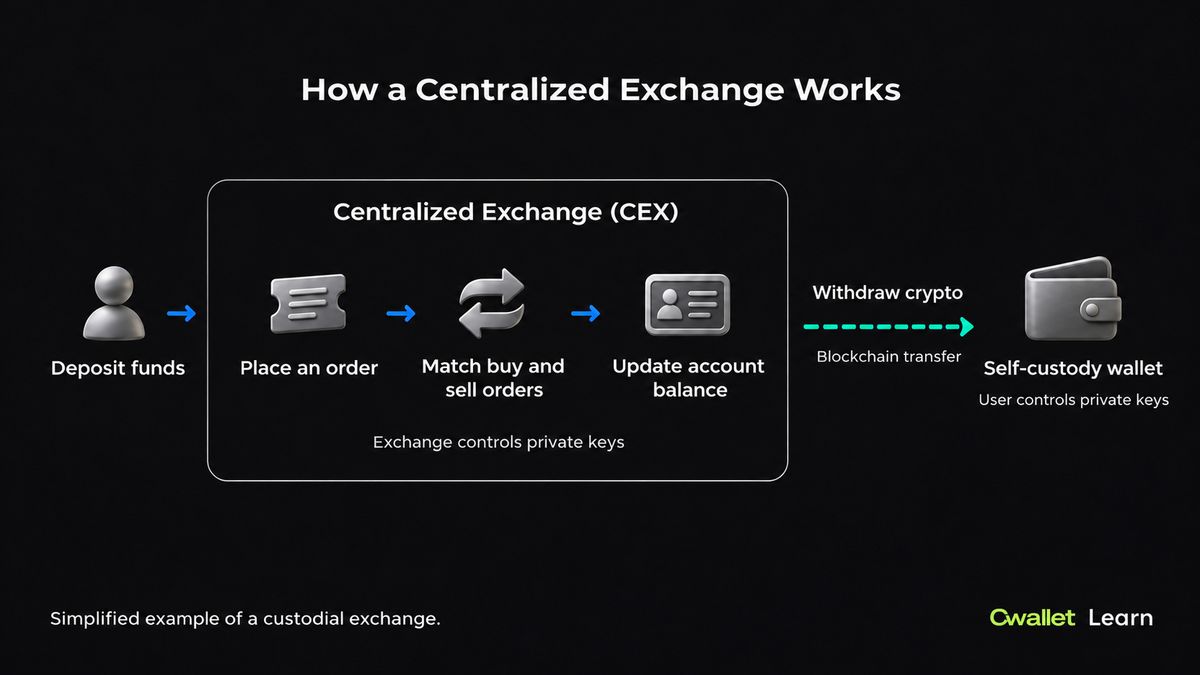
A CEX, or centralized exchange, is a cryptocurrency trading platform operated by a company. Users create accounts to buy, sell, and trade crypto, while the exchange generally manages deposited assets and their private keys. This offers convenience but makes users dependent on the platform for custody and access to funds.
CEX Meaning: What Is a Centralized Exchange?
To define CEX simply, it is a company-managed marketplace that facilitates cryptocurrency trading. Examples include Binance, Coinbase, and Kraken. Available services, assets, and payment methods vary by platform and location.
Many centralized exchanges use an order book to match buyers and sellers. Completed trades update users’ account balances; withdrawing crypto to an external wallet is a separate process.
This distinction matters: holding a balance on an exchange is not the same as controlling the private keys. In a custodial account, the platform manages those keys on your behalf.
Advantages of CEX: Why Users Prefer Centralized Exchanges
1. Access to Liquidity
Active exchanges can bring together enough buyers and sellers to help orders execute efficiently. However, liquidity varies by platform and trading pair. Check the bid–ask spread and order-book depth rather than assuming every market has sufficient liquidity.
2. User-Friendly Interfaces
CEX platforms often combine buy-and-sell screens, price charts, and account dashboards. Users can trade without connecting a separate wallet or approving a blockchain transaction for every order, making the process more approachable for beginners.
3. Fiat-to-Crypto Support
Some exchanges support purchases using traditional currencies through bank transfers, cards, or other payment methods. Availability, processing times, and charges depend on the platform and the user’s location.
4. Account Security Features
Exchanges may provide two-factor authentication, withdrawal address controls, and account alerts. These features help protect account access, but they do not eliminate platform-level risks such as security breaches or financial failure.
5. Trading Pairs and Tools
Centralized exchanges may offer multiple trading pairs and order types, including market and limit orders. Some provide margin trading or derivatives, although these products introduce additional risks and are not necessary for basic purchases.
Disadvantages of CEX: Be Aware of Exchange Risks and Challenges
1. Fund Security Risks
Custodial exchanges hold assets on users' behalf. A hack, operational failure, or bankruptcy can affect access to those funds. Strong personal account security does not remove the risks associated with the platform itself.
2. Regulatory and Access Restrictions
Local regulations and exchange policies can affect account eligibility, available assets, and supported services. Users should check the terms that apply to their location before depositing funds.
3. Limited Control Over Assets
In a typical custodial account, the provider controls the private keys. Users request transfers through the platform rather than authorizing them independently. Self-custody offers direct key control but also makes users responsible for protecting their keys.
Cwallet, for example, provides a custodial wallet: it manages private keys on users' behalf. This illustrates why custody matters when choosing a crypto service — not just when choosing an exchange.
4. Trading and Withdrawal Costs
Costs may include trading fees, spreads, payment-processing charges, and withdrawal fees. Compare the total cost of buying, trading, and withdrawing rather than judging a platform by its advertised trading fee alone.
5. Dependence on Platform Operations
Users rely on the exchange's systems to access accounts, place orders, and withdraw assets. Maintenance, outages, account reviews, or withdrawal suspensions can interrupt access even when an account displays an available balance.
CEX vs. DEX: Key Differences
A decentralized exchange typically lets users trade through their own wallets using blockchain-based protocols. The main differences involve custody, access, and responsibility — not simply which option is faster or cheaper.
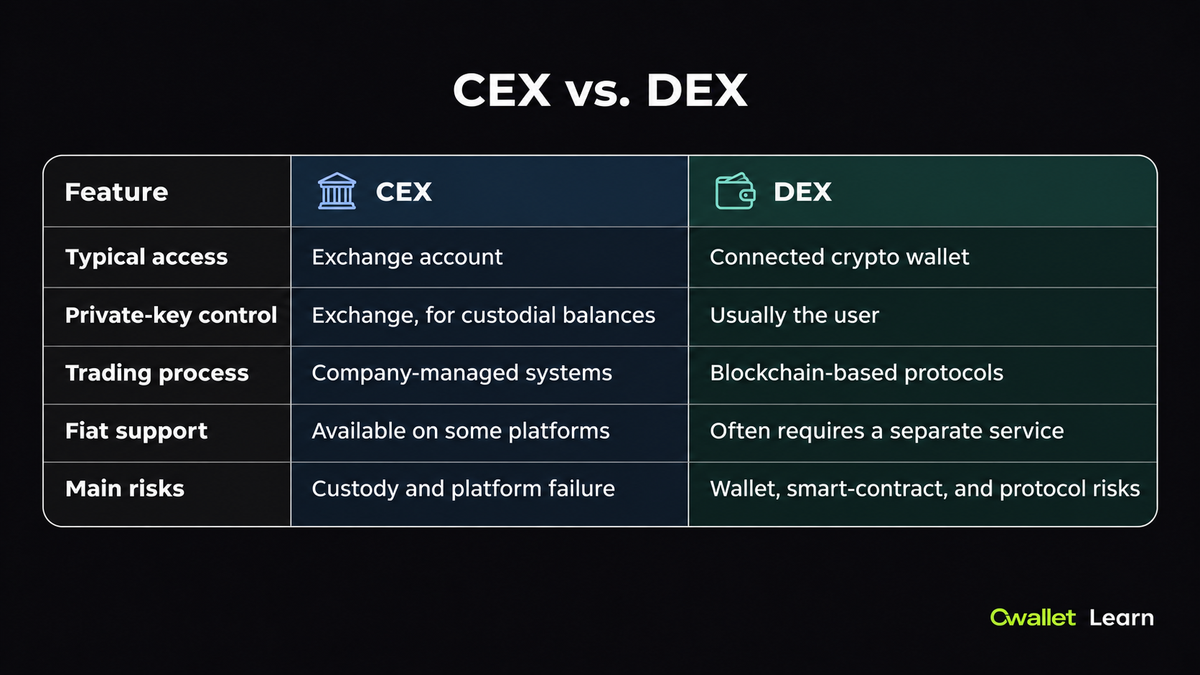
These are common patterns; individual products may work differently. For a detailed comparison, read CEX vs. DEX: Understanding the Difference. You can also explore what a DEX is and how it works.
Conclusion
Centralized exchanges offer convenient access to cryptocurrency trading, but that convenience comes with reliance on an operator. Before using one, understand who controls the private keys, what fees apply, and how withdrawals work. Choose services based on your needs and risk tolerance — not convenience alone.To explore an account-based approach to managing crypto, learn about Cwallet's custodial wallet and review how its custody model works.

Common Questions About CEX
What Does CEX Mean in Crypto?
CEX means centralized exchange: a company-operated platform where users buy, sell, and trade cryptocurrencies through accounts.
What Is a CEX Used For?
A CEX facilitates cryptocurrency trading. Depending on the platform and location, it may also support purchases with traditional currencies and fiat withdrawals.
Do You Control Your Private Keys on a CEX?
Usually not in a custodial exchange account. The platform manages the private keys, while you control access to your account.
Is a CEX the Same as a Crypto Wallet?
No. A CEX provides trading services and typically includes custodial storage. A self-custody wallet lets users control their own private keys.
Are Centralized Exchanges Safe?
No exchange is risk-free. Security breaches, platform failures, and withdrawal restrictions remain possible, even when account protections are available.
Disclaimer: The information in this article is for educational purposes only and does not constitute financial advice, investment advice, trading advice, or any other sort of advice. High-leverage trading involves substantial risk of loss and is not suitable for every investor. Please perform your own due diligence and never invest money that you cannot afford to lose.