
Down 8% This Week: Is It Time to Panic Sell or Hold Ethereum?
ETH is the weakest major coin this week, down 8.4% while the total crypto market sits at $2.06 trillion.

Key Takeaways
- ETH is the weakest major coin this week, down 8.4% while the total crypto market sits at $2.06 trillion.
- The Ethereum Foundation is restructuring. A 40% budget cut, 54 layoffs, and nine senior departures — including both co-executive directors — have prompted a former insider to warn of a structural funding gap the market hasn't priced in.
- ETH holders have options beyond selling. Cwallet's Simple Earn, Loans, and Perpetual Futures turn the complexity of managing staked ETH, DeFi positions, and downside risk into a single-interface workflow.
Watching the screen glow red as ETH slides through critical support levels is a stressful, familiar experience. Down 8.4% this week to $1,581, Ethereum is currently the worst-performing major coin.
But this pain isn't just Bitcoin dragging the market down; it is the result of three specific internal pressures—from a restructuring Foundation to massive DeFi liquidations—converging all at once.
Understanding these forces is the difference between panic-selling at the absolute bottom and having the patience to ride out the storm.
Why Is ETH Falling Harder Than the Rest of the Market?
Ethereum's ongoing sell-off is being driven by two mechanical forces working simultaneously.
First, continuous staking withdrawals are re-entering the circulating supply, creating a persistent structural sell pressure unique to Ethereum.
Second, a massive DeFi deleveraging wave is turning routine corrections into a downward cascade. With Ethereum's total value locked dropping over 12% to $36.72 billion alongside thinning stablecoin supplies, users are unwinding positions en masse—selling ETH to repay loans and de-risk. This has triggered a self-feeding loop where lower prices force more liquidations, dragging the market down to an 8.4% weekly loss.
Technically, the situation is cautious but not yet catastrophic. While the RSI sits in bearish territory at 40.10, MACD indicators show that selling momentum is at least beginning to ease. Ultimately, the $1,550-$1,600 zone remains the critical line in the sand; if this support breaks, the market will likely slide toward the next demand area at $1,400-$1,450.
What's Really Happening Inside the Ethereum Foundation?
Beneath Ethereum's current $1,581 price action lies a major structural shift: the Ethereum Foundation is undergoing its most significant restructuring ever, cutting 20% of its workforce (54 positions) and slashing its operating budget by 40%.
Co-founder Vitalik Buterin is steering the organization toward a conservative endowment model, aiming to reduce annual treasury spending from 15% to just 5% by 2030. This transition has triggered a massive leadership shuffle, with nine senior figures—including both co-executive directors—departing since January, just as a new competing research entity called Ethlabs emerges.
While Fundstrat’s Tom Lee emphasizes there is "zero chance" of financial collapse due to a multi-year operational buffer, former insider Trent Van Epps warns that this deliberate step-back creates a $20–$30 million annual funding gap for core protocol development. Ultimately, this is a carefully managed transition toward decentralization, but it introduces a layer of structural uncertainty that the market has likely not finished pricing in.
Why Does the $51 Billion RWA Market Make ETH's Sell-Off Different This Time?
There is a layer to Ethereum's current price action that did not exist in previous cycles, and it changes the risk calculus for every ETH holder.
Bernstein has labeled 2026 the maturation year for RWA tokenization. The tokenized real-world asset market now stands at $51 billion, and Ethereum hosts roughly one-third of it. That means institutional capital flowing into tokenized Treasuries, private credit, and equities runs directly through Ethereum's infrastructure. When traditional finance rebalances RWA exposure during a risk-off cycle, ETH absorbs that friction alongside crypto-native selling.
In a bull market, this is a powerful narrative — ETH as the settlement layer for traditional finance's blockchain migration. In a deleveraging cycle, it means less downside resilience, because the same infrastructure that makes ETH indispensable long-term also makes it more correlated with broad institutional risk-off moves. It is a double-edged sword, and right now the sharp side is cutting.
📖 Related reads: Why Crypto Traders Are Suddenly Watching RWA Again · What Is Slippage in Crypto Trading?
How Can You Protect Your ETH Position Without Selling?
The complexity of holding ETH in 2026 is that you are rarely just holding ETH. You likely have staking positions with multi-day withdrawal queues. LP tokens earning yield across DeFi protocols. Perhaps a loan against your ETH as collateral, where every percentage point the price drops brings you closer to liquidation.
Cwallet was built to collapse that complexity into a single interface — not to promise you ETH will recover tomorrow, but to make sure you do not get caught off guard by everything else your ETH is doing while you watch the price.
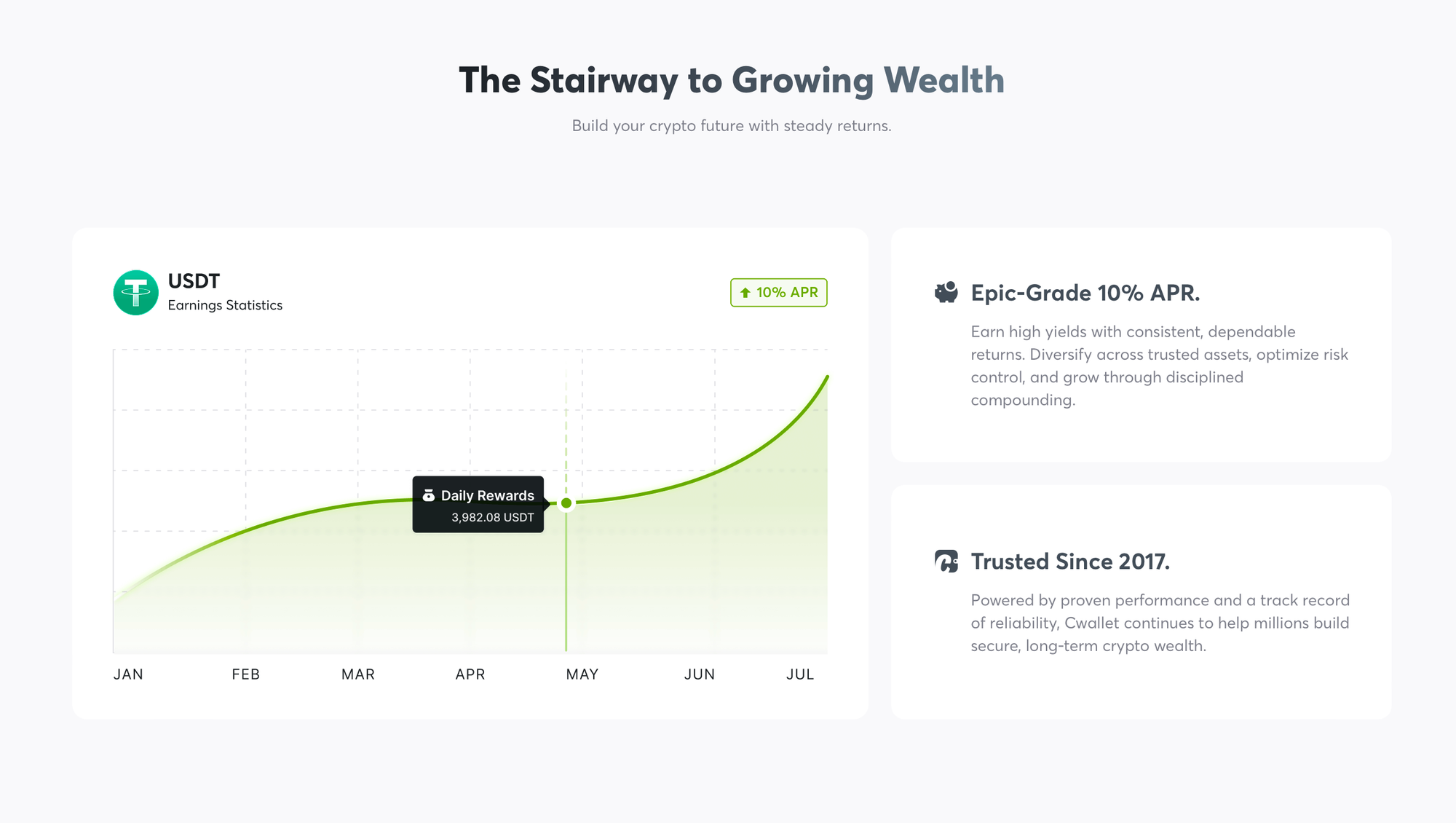
- Simple Earn generates passive yield on your ETH without requiring you to run a validator node, manage slashing risk, or lock into withdrawal queues. One click, and critically — instant access to your funds when you decide the time is right to act.
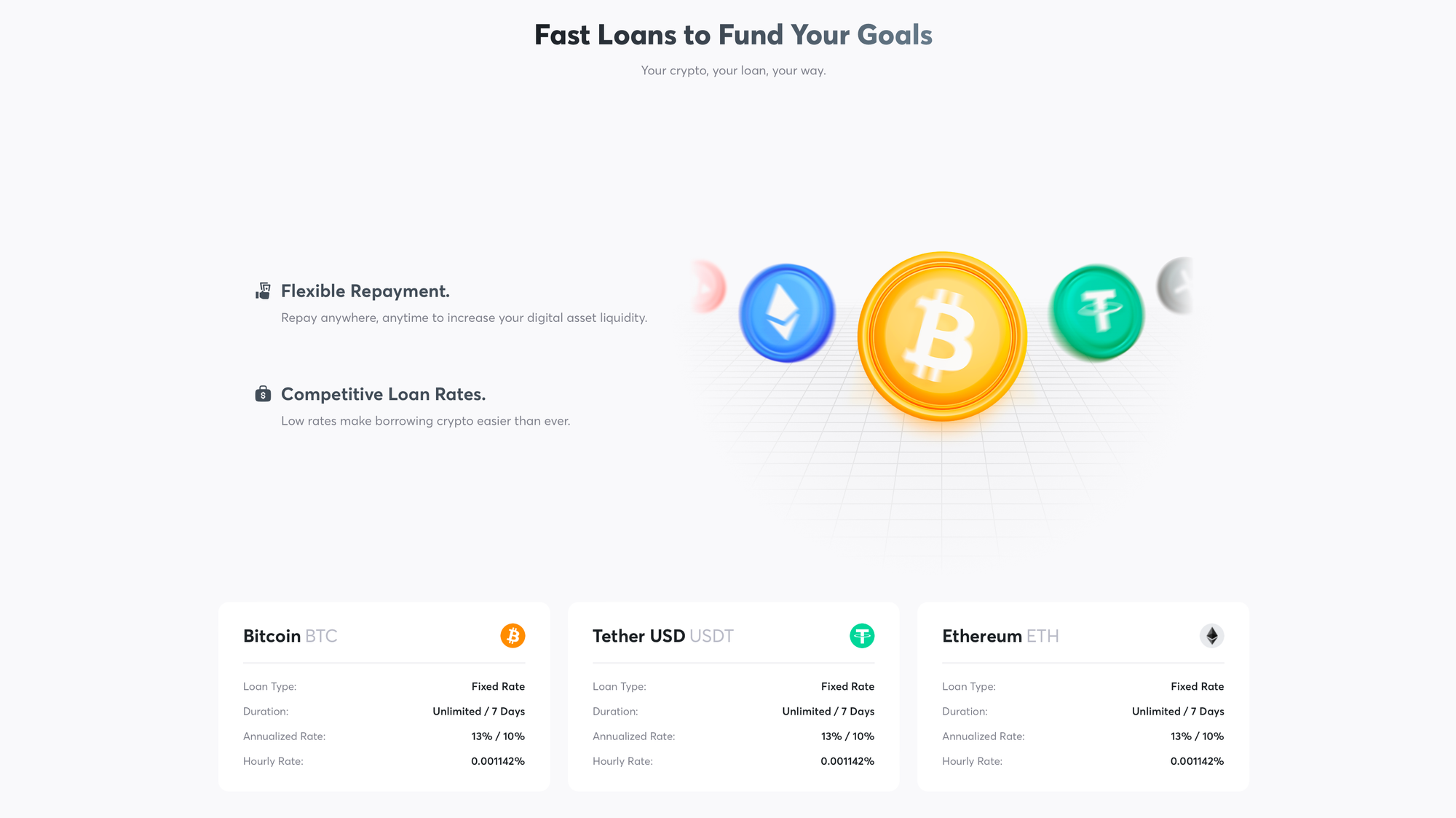
- Loans let you borrow stablecoins against your ETH as collateral. In a downturn, this is the tool that prevents forced selling. You access the liquidity you need without triggering a taxable event and without forfeiting upside exposure if the market reverses.
- Spot Trading and Perpetual Futures complete the toolkit. Spot Trading means executing directly from your wallet across 60+ chains — no bridging, no key exports. Perpetual Futures give you the ability to hedge your ETH exposure or open short positions without disturbing your staked collateral.
The alternative — managing staking on one platform, LP positions on another, loans on a third, and trading on a fourth — is not a strategy. It is a liability, especially when ETH is moving 8% a week and the next liquidation cascade could start before you finish logging into your third wallet.
Summary
Ethereum at $1,581 is the convergence of three pressures, each demanding a different response from ETH holders. Staking withdrawals and DeFi deleveraging are mechanical sell-side forces — cyclical, not permanent, but requiring active risk management while they persist.
The Ethereum Foundation's restructuring is a structural transition introducing governance uncertainty at a moment when the network's RWA infrastructure is drawing record institutional attention. And ETH's deep integration with the $51 billion tokenized RWA market means it absorbs institutional rebalancing on top of crypto-native selling.
Cwallet's Simple Earn, Loans, Spot Trading, and Perpetual Futures give holders the practical tools to navigate this complexity — earning yield, accessing liquidity, and hedging risk — all from one interface. The market is not asking you to sell your ETH. It is asking you to be smarter about how you hold it.
Cwallet: Your All-in-One Crypto Solution
Cwallet allows you to store, trade, and manage 1,000+ cryptocurrencies across 60+ blockchains, offering flexibility for both Spot Trading and Futures Trading. With features like Perpetual Trading, Cozy Card, and more, Cwallet empowers you to make the most of your crypto journey.
Join the Community & Earn More
Trade daily, earn more. Cwallet's Telegram and Discord communities host regular trading challenges across Market Battle, Trend Trade, 1001X, and Tap Grid, with extra rewards waiting for active participants.
👉 Join us on Telegram or Discord to participate in ongoing events and claim your rewards.
Official Links
Official Site: https://cwallet.com
X: https://x.com/CwalletOfficial
Disclaimer
This content is for informational purposes only and does not constitute financial advice. Crypto assets are volatile, and all investment decisions should be based on your own research (DYOR). Cwallet assumes no liability for any losses.