Crypto in 2026: How SEC Rules Are Quietly Changing the Market
Key Takeaways
- The 2026 innovation exemption marks a shift from enforcement-first to compliance-oriented regulation for digital assets.
- This policy encourages protocols to build compliant infrastructure while innovating, especially in areas like stablecoins and DeFi.
- Tools like Cwallet help users stay informed, manage assets securely, and navigate a regulatory landscape that increasingly values transparency and accountability.
At the end of 2025, the U.S. Securities and Exchange Commission (SEC) signaled a major shift in how it approaches crypto and digital asset regulation. Instead of focusing on enforcement actions, the agency introduced a new “innovation exemption” policy that aims to establish clearer paths for compliant crypto projects to operate while avoiding costly traditional registrations.
This change, set around January 2026, represents a new era: one where digital assets are woven more deeply into established financial and legal frameworks without abandoning the innovation that makes blockchain technology unique. Rather than fear this turn, Web3 users should understand what this means for digital assets, DeFi protocols, stablecoins, and on-chain economies.
What Is the SEC Innovation Exemption?
The innovation exemption introduced by the SEC is designed to give certain crypto projects a temporary compliant operating space without requiring them to go through the usual, time-consuming securities filings (like a full IPO registration). Under this framework:
- Projects can operate under a compliance buffer while they build out infrastructure
- They are expected to submit simplified disclosures instead of full registration statements
- This applies mainly to digital asset protocols, governance tokens, and decentralized networks that meet specific criteria
In essence, the policy acknowledges that traditional securities registrations don't always fit the reality of blockchain innovation — and it creates a mechanism where developers can build and comply simultaneously.
Why This Matters for Crypto and DeFi?
For much of the last decade, the SEC's approach leaned heavily on enforcement — cracking down on projects retroactively for missing registrations. With the innovation exemption, the narrative flips toward permissioned compliance, where a project can adhere to guidelines upfront and still avoid being labeled a security in the traditional sense.
This has several implications:
- DeFi protocols and DAOs can begin structuring their governance models with compliance in mind
- Stablecoin issuers may benefit most, as integrated AML/KYC and on-chain risk monitoring become part of the standard
- Blockchain developers can plan product roadmaps without fearing enforcement over procedural lapses
Importantly, this policy is not a free pass — projects still need to demonstrate real compliance infrastructure and transparency.

How the New Policy Affects Stablecoins and On-Chain Standards
Stablecoins have long been under scrutiny for their reserve practices and use cases in global payments. The innovation exemption reframes how stablecoins can comply without being burdened by securities law, by emphasizing real-time on-chain risk monitoring and transparency in reserve flows.
Rather than seeing regulation as an external enemy, this model nudges the industry toward better on-chain auditability, traceable token flows, and integrated AML/KYT (Anti-Money Laundering / Know Your Transaction) tools. In other words, compliant behavior becomes part of the blockchain’s fabric — written into smart contracts and protocol architecture.
This shift is crucial for DeFi’s maturation and for adoption by traditional financial players who must meet regulatory standards to participate.
Can Crypto Still Innovate in This Environment?
Yes. In fact, many argue that embedding compliant layers into protocol design is the next logical step in blockchain’s evolution. The new policy doesn’t outlaw experimentation; it structures it. Projects that meet baseline compliance can operate in this “innovation sandbox,” developing products while aligning with legal expectations.
This doesn’t mean every crypto project suddenly becomes regulated like a bank. It means that forward-looking teams are expected to invest in transparent governance, on-chain monitoring, and risk-aware development practices.
Think of it less as regulation limiting innovation, and more as innovation requiring responsible frameworks — similar to how financial products must meet certain standards before listing on mainstream exchanges.
How Tools Like Cwallet Help You Navigate the New Compliance Era
As crypto enters a new regulatory chapter, users benefit from tools that not only simplify everyday trading and portfolio management, but also support visibility and compliance-friendly tracking.
Platforms like Cwallet offer:
- A unified dashboard to track spot and on-chain holdings across multiple networks
- Portfolio views that help users monitor assets in real time
- Integrated support for both spot trading and DeFi interactions
- A design philosophy aligned with emerging regulatory expectations, helping users stay informed about where their digital assets sit
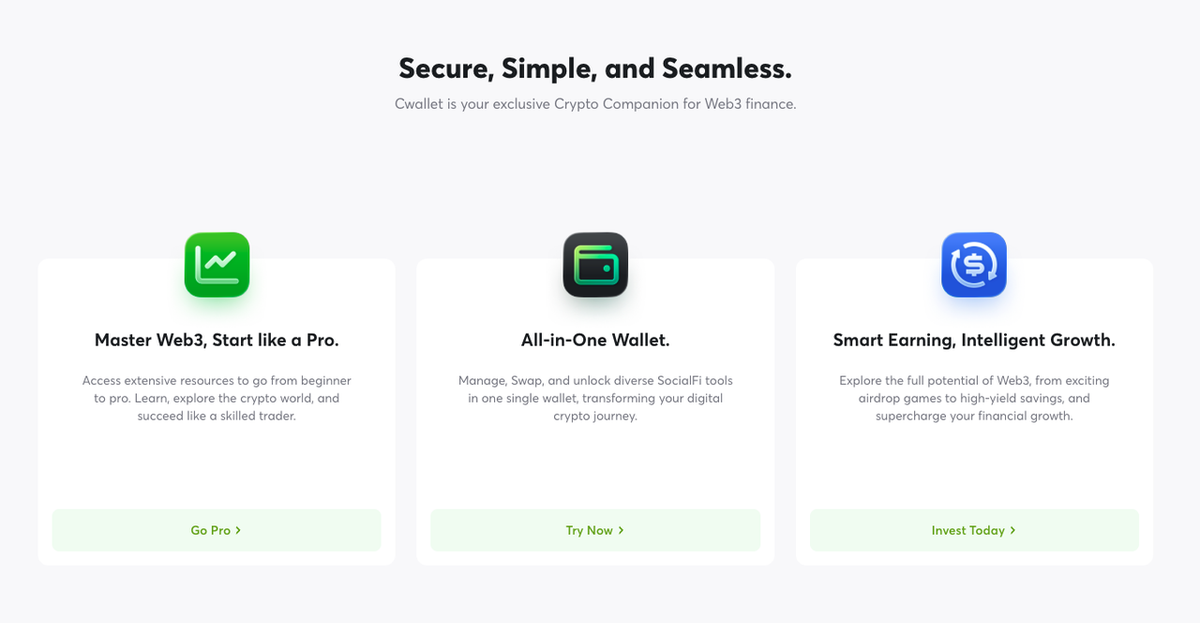
For beginners and advanced users alike, Cwallet's transparent approach makes navigating on-chain activity easier and safer in a world where compliance is becoming part of digital asset infrastructure.
Instead of fearing regulatory shifts, users can leverage tools that make the ecosystem more navigable — ensuring clarity without sacrificing access to core crypto features.
What Comes Next for Blockchain Regulation
The innovation exemption framework is not a final destination — it's an evolving step toward harmonizing blockchain development with legal expectations. Over time, we may see:
- More on-chain compliance tools integrated into protocols
- Standardized reporting requirements for liquidity providers
- Increased institutional participation as compliance becomes clearer
The industry's path forward is not about avoiding rules — it’s about embracing frameworks that make Web3 more accessible, secure, and trusted.
Cwallet: Your Secure, All-in-One Gateway to Global Crypto Finance
Cwallet redefines the digital wallet, offering a unified, high-performance platform to manage your entire portfolio, supporting over 1,000 cryptocurrencies across 60+ global networks. We combine top-tier security with unmatched utility.
Financial Control: Go beyond holding. Engage in Spot Trading, including Swap, Memecoins, and xStocks, or explore Futures Trading, such as Perpetual Trading, 1001X, Trend Trade, and Market Battle, for dynamic market action.
Real-World Power: Instantly unlock the spending potential of your assets. The Cozy Card transforms your crypto into a flexible payment solution for secure, real-world transactions online and offline.
Practical Tools: Boost efficiency with integrated services. Use HR Bulk Management for business needs, or Gift Cards and Mobile Top-ups for everyday utility.
Cwallet is where security, utility, and innovation come together in one powerful application.Join millions transforming the way they manage their digital wealth.
Official Link
Official Site: https://cwallet.com
Twitter: https://twitter.com/CwalletOfficial
Disclaimer: This content is for informational purposes only and does not constitute financial advice. Crypto assets are volatile, and all investment decisions should be based on your own research (DYOR). Cwallet assumes no liability for any losses.