
21 Banks Are Building a Stablecoin: What Does It Mean?
21 major banks plan a USD stablecoin for 2027. Discover why stablecoins are moving beyond crypto into mainstream finance.

Key Takeaways
- 21 major financial institutions are planning a U.S. dollar stablecoin for H1 2027.
- Banks are increasingly treating stablecoins as financial infrastructure, not just crypto trading tools.
- The shift could reshape how users move, hold, and use digital dollars across crypto and traditional finance.
For years, stablecoins were largely seen as crypto's digital cash, a convenient way to trade, move funds between exchanges, or stay in dollars without leaving the crypto market.
That perception is changing.
On September 1, a group of 21 major financial institutions, including Goldman Sachs, Bank of America, Citi, and Deutsche Bank, announced plans to create a company that will issue a U.S. dollar-pegged stablecoin in the first half of 2027. The initiative was originally announced in October 2025 with just 10 institutions. The bigger story is not simply that another stablecoin is coming. It is that some of the world's largest financial institutions now appear to see blockchain-based dollars as infrastructure worth building around.
Why Are Banks Taking Stablecoins Seriously Now?
The stablecoin market has changed significantly from its early days.
Stablecoins are no longer used only by crypto traders looking for a stable asset between volatile positions. They are increasingly being explored for payments, cross-border transfers, settlement, and tokenized financial markets.
For banks, that creates an obvious opportunity. Blockchain networks can potentially move value around the clock, across borders, without relying entirely on the traditional layers of financial intermediaries.
The new consortium's plans reflect exactly this direction. Its initial focus is a dollar-denominated stablecoin, with expansion to other G7 currencies planned later, and the euro identified as a priority. In other words, banks are not simply trying to create another crypto asset. They are exploring whether digital money can become part of the next generation of financial rails.
📖 Related: Visa Enters the Stablecoin Infrastructure Race | Cwallet
Could Bank Stablecoins Challenge USDT and USDC?
This is where things get more interesting for crypto users.
Today, stablecoin activity is dominated by established players such as USDT and USDC. Tether alone says it has issued more than $180 billion of its dollar-pegged token, showing just how difficult it will be for new entrants to compete on liquidity and network effects. And bank-backed stablecoins still have something to prove. Société Générale launched a dollar-backed stablecoin in 2025, but its circulation remains relatively small compared with the leading crypto-native stablecoins. So the question may not be whether banks can immediately replace USDT or USDC.
Instead, they could gradually create a parallel layer of regulated digital money, particularly for institutional payments, settlement, and cross-border transactions.
That could eventually bring more users and more capital into the broader stablecoin economy.
What Could This Mean for Everyday Crypto Users?
The biggest impact may not be visible as a new token in someone's wallet.
It could be felt how easily money moves between different financial environments.
Today, users often have to think about exchanges, banks, payment providers, networks, wallets, and conversion steps when moving digital assets from one place to another. Stablecoins have already simplified part of that process, but the infrastructure remains fragmented.
If banks begin treating stablecoins as a mainstream settlement layer, that fragmentation could gradually shrink.
A stablecoin could become less like a crypto trading instrument and more like a digital dollar that can move between payments, savings, transfers, and onchain applications.
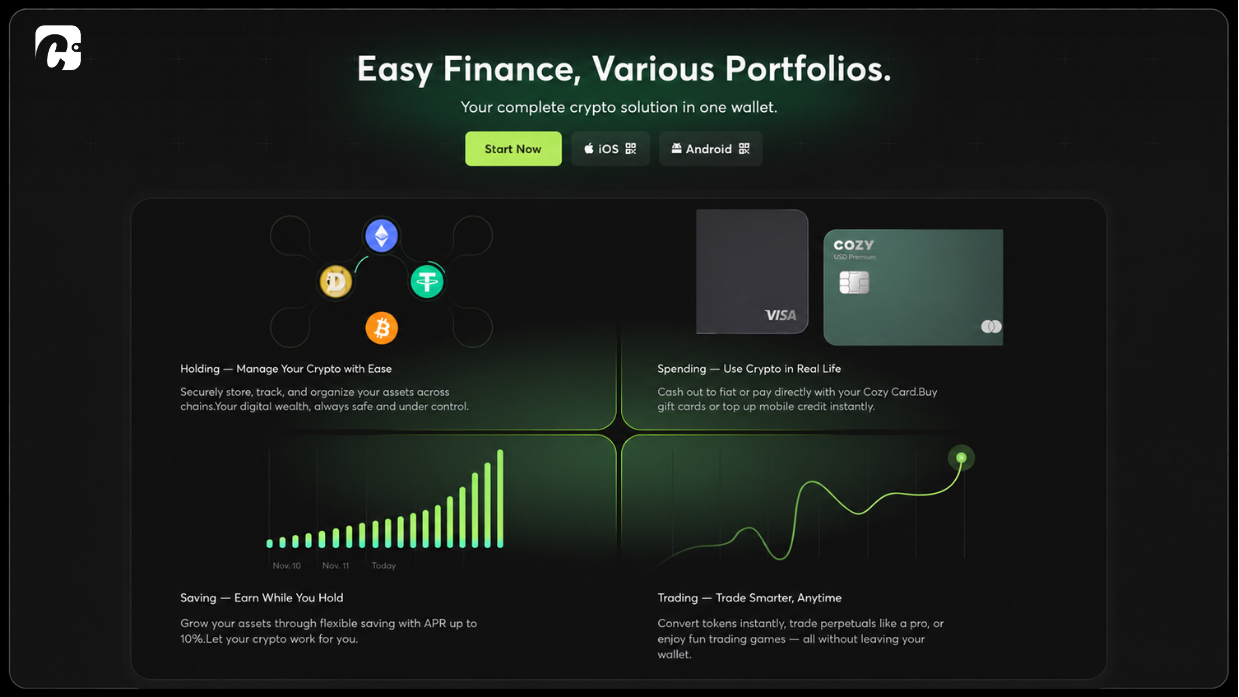
That is also where wallets become increasingly important. As digital assets move across more financial scenarios, users need a simple way to hold, send, receive, and manage different forms of crypto and stablecoin assets in one place. Cwallet's role as a Web3 hub fits naturally into this transition, giving users a single wallet environment for managing digital assets as the boundary between traditional finance and Web3 continues to blur.
Are Stablecoins Becoming the New Financial Rails?
The answer is not clear yet—but the direction is.
The 21-bank initiative is only one example. Another consortium of 37 financial institutions, Qivalis, is also preparing a euro-pegged stablecoin, showing that competition is emerging beyond the existing crypto-native market. The real significance is that stablecoins are increasingly being discussed in the same conversations as payments, settlement, tokenization, and global financial infrastructure.
USDT and USDC helped prove that digital dollars could work at scale inside crypto.
The next phase may be about proving that stablecoins can work outside crypto as well.
Cwallet: Your All-in-One Crypto Solution
Cwallet allows you to store, trade, and manage 1,000+ cryptocurrencies across 60+ blockchains, offering flexibility for both Spot Trading and Futures Trading. With features like Perpetual Trading, Cozy Card, and more, Cwallet empowers you to make the most of your crypto journey.
Join the Community & Earn More
Trade daily, earn more. Cwallet's Telegram and Discord communities host regular trading challenges across Market Battle, Trend Trade, 1001X, and Tap Grid, with extra rewards waiting for active participants.
👉 Join us on Telegram or Discord to participate in ongoing events and claim your rewards.
Official Links
Official Site: https://cwallet.com
X: https://x.com/CwalletOfficial
Disclaimer
This content is for informational purposes only and does not constitute financial advice. Crypto assets are volatile, and all investment decisions should be based on your own research (DYOR). Cwallet assumes no liability for any losses.