
Cwallet Weekly Crypto Express | Tokenized Stocks Are Taking Off What Should Investors Know?
Tokenized stocks are rapidly becoming one of the hottest narratives in the crypto industry, bridging traditional equities with blockchain infrastructure.

Executive Summary (Week 26)
- Tokenized stocks are rapidly becoming one of the hottest narratives in the crypto industry, bridging traditional equities with blockchain infrastructure.
- Not all tokenized stock products represent the same type of ownership or investment exposure.
- Different tokenization models create meaningful differences in pricing, liquidity, and investor rights.
- NVIDIA offers a real-world example of how multiple on-chain products can track the same stock while behaving very differently.
- As tokenized equities continue to evolve, understanding product structure may become just as important as choosing the underlying asset.
Market Update
Tokenized stocks are quickly moving from an experimental concept to one of the fastest-growing sectors within Real World Assets (RWA). Over the past few weeks, traditional financial institutions and crypto-native companies alike have accelerated their efforts to bring equities on-chain. From infrastructure providers exploring tokenized securities to exchanges expanding blockchain-based stock offerings, the conversation has shifted beyond whether stocks belong on-chain to how they should be represented.
As more investors gain access to tokenized equities, understanding the differences between various products is becoming increasingly important. Although many instruments track the same underlying stock, they may offer very different ownership rights, liquidity profiles, and trading experiences.
Why Tokenized Stocks Are Gaining Momentum?
For decades, investing in public equities has largely depended on traditional brokerage systems and market hours. Tokenization introduces a new model by representing stock exposure on blockchain networks, allowing assets to integrate with decentralized finance while enabling more flexible trading and settlement.
The growing interest in tokenized stocks is driven by several advantages:
- 24/7 on-chain price discovery
- Greater interoperability with DeFi protocols
- Improved accessibility for global investors
- Faster settlement compared with traditional infrastructure
- New opportunities for collateral and capital efficiency
However, "tokenized stock" is not a single product category. Different issuers use different legal and technical structures, creating varying levels of ownership and investor protection.
📖 Related Read: RWA Tokenization Hits $51 Billion as Equities Go Onchain — Cwallet Blog
Three Ways to Gain Exposure to Tokenized Stocks
Today's market broadly offers three approaches to on-chain equity exposure.
1. Issuer-Native Equity
This model represents the closest equivalent to direct stock ownership. Investors receive blockchain-based securities issued directly under the applicable regulatory framework, preserving shareholder rights while benefiting from blockchain infrastructure.
2. Custodial Wrapped Equity
This is currently one of the most common tokenized stock models.
Instead of owning the underlying shares directly, investors own a token backed 1:1 by shares held through a regulated custodian or special-purpose vehicle (SPV). While holders receive the economic performance of the stock, voting rights and legal ownership remain with the issuing entity.
Projects such as Backed's xStocks and Ondo's tokenized equities fall into this category.
3. Derivative Exposure
Perpetual futures offer price exposure without ownership of the underlying stock.
Rather than holding tokenized shares, traders speculate on price movements through derivative contracts settled in cash or stablecoins. This model sacrifices ownership rights but provides significantly greater capital efficiency and liquidity for active traders.
Each model represents a different balance between ownership, flexibility, and trading efficiency.
NVIDIA Shows Why Structure Matters
$NVIDIA provides one of the clearest examples of how different tokenized products can produce different market behavior despite referencing the same company.
Today, Nvidia exposure is available through:
- Tokenized stocks such as NVDAx
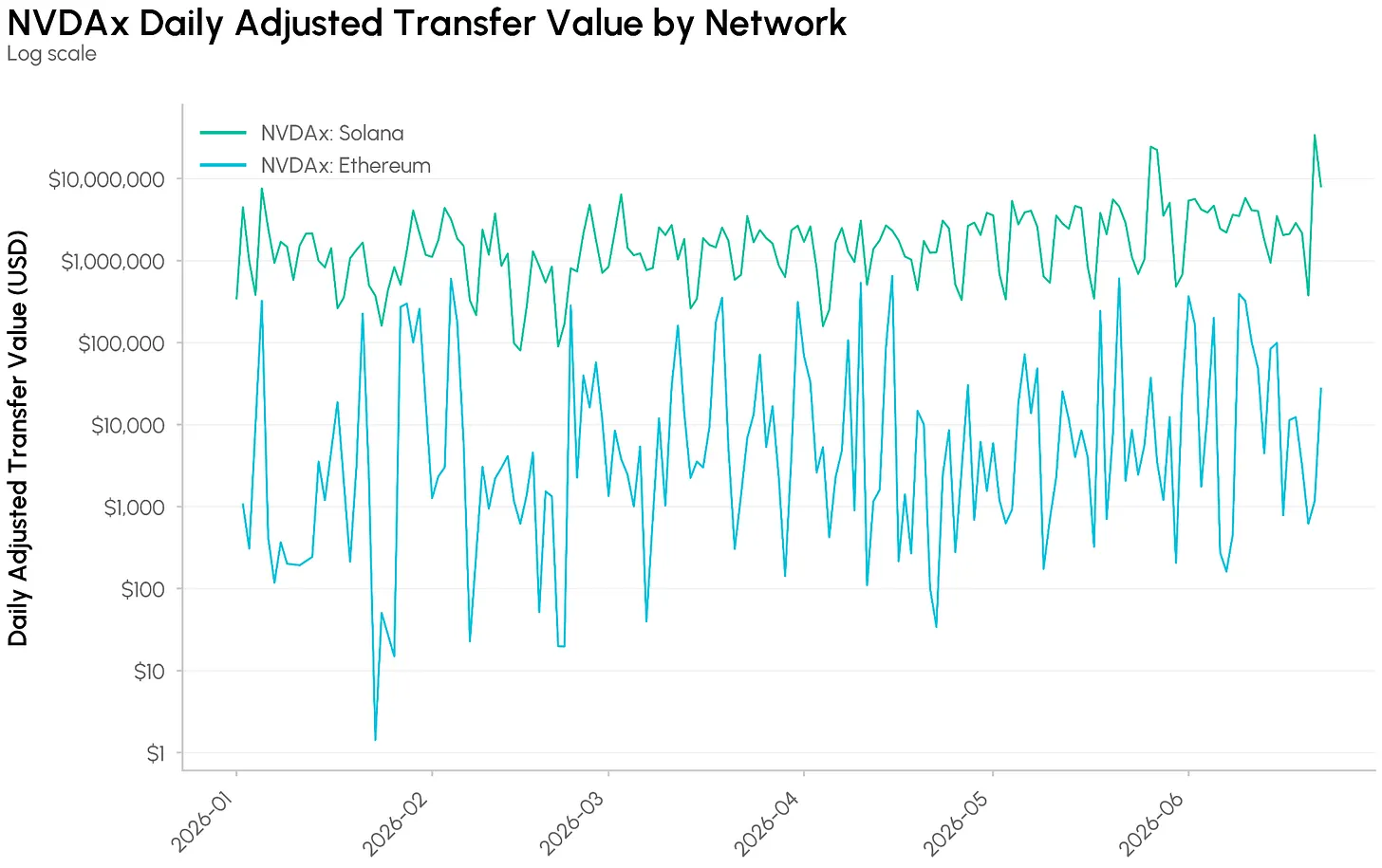
- Ondo's NVDAON
- Perpetual futures on exchanges including Hyperliquid, Binance and Cwallet.
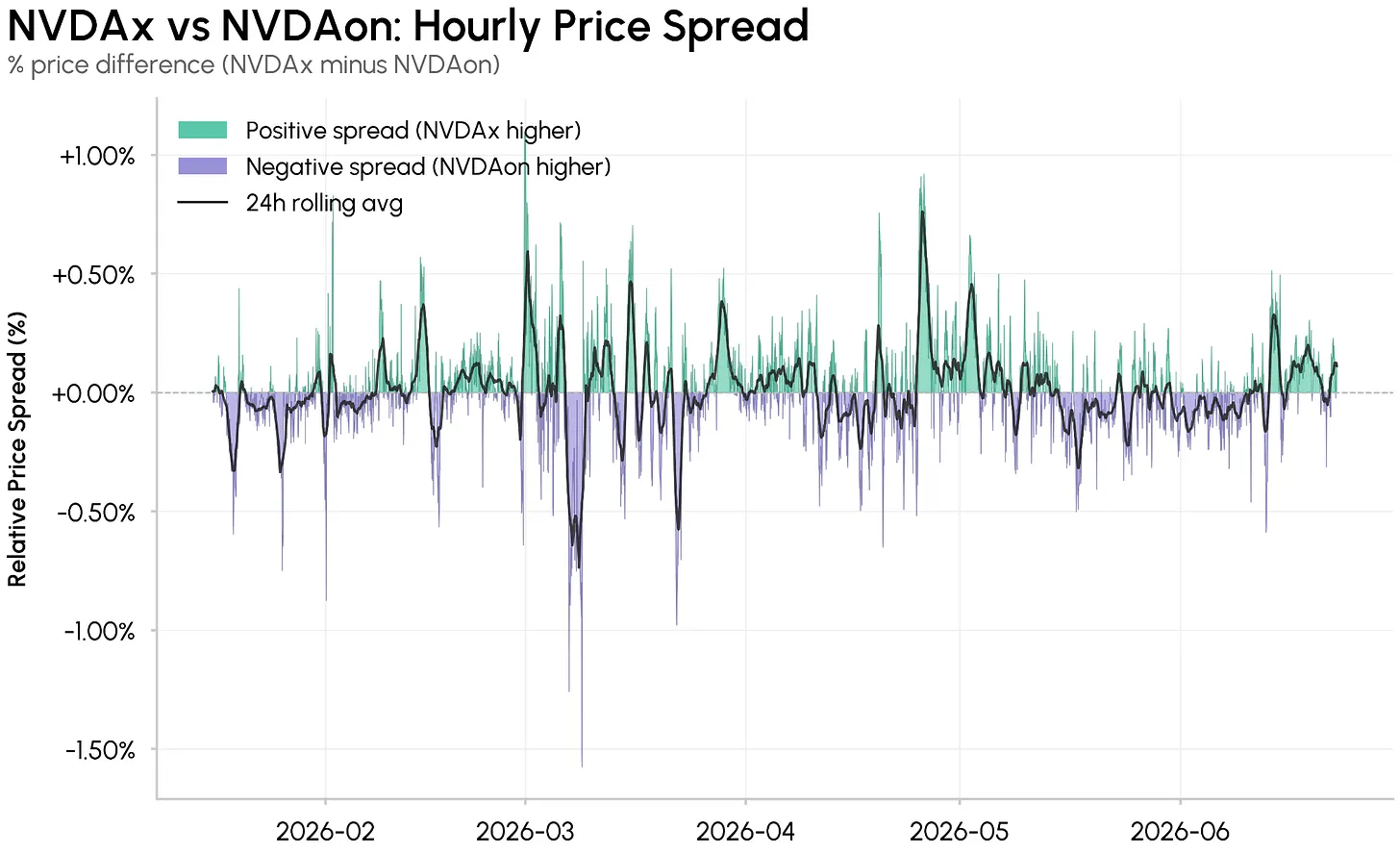
Although these products all track Nvidia's price, they are issued under different legal structures, rely on separate custodians, and trade across independent liquidity pools.
As a result, prices are not always identical.
Temporary premiums and discounts frequently emerge between different tokenized products, creating arbitrage opportunities for professional traders while highlighting the fragmented nature of this rapidly developing market.
The differences extend beyond pricing.
Trading activity also varies significantly across regions and time zones. Some products experience stronger liquidity during U.S. market hours, while others maintain relatively active trading during weekends or Asian trading sessions. These variations demonstrate that market structure—not just the underlying asset—plays an increasingly important role in price formation.
Why Perpetual Futures Continue to Dominate
Despite growing interest in tokenized spot equities, perpetual futures remain the dominant form of on-chain stock exposure.
Unlike spot tokenized stocks, perpetual contracts do not require exchanges to custody the underlying shares. This simplifies market operations while making it easier to attract liquidity and support larger trading volumes.
For Nvidia, perpetual futures currently generate trading volumes that significantly exceed tokenized spot markets, reflecting strong demand from traders seeking efficient short-term exposure rather than direct ownership.
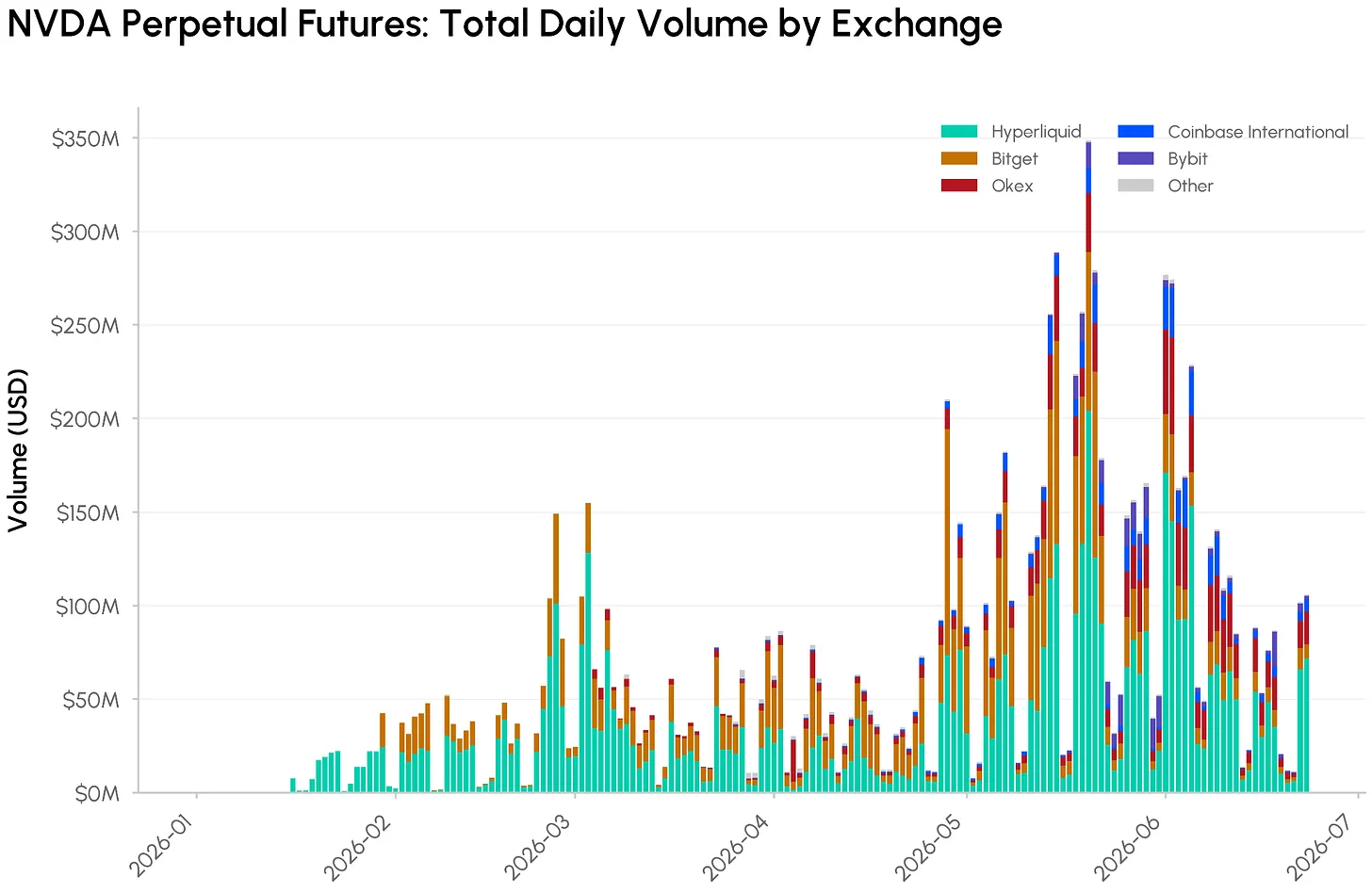
This illustrates an important trend across crypto markets: accessibility and liquidity often outweigh ownership when traders prioritize execution speed and capital efficiency.
📖 Related Read: Unlocking RWA Perpetuals: A Guide for Professional Traders
What This Means for Crypto Users
As tokenized equities continue expanding, investors will increasingly need to evaluate not only what they are buying, but how that exposure is structured.
Long-term investors may prefer tokenized stocks that closely mirror traditional equity ownership and provide direct economic exposure. Active traders, meanwhile, may find perpetual futures more suitable due to their higher liquidity, leverage options, and lower capital requirements.
Understanding these differences can help users select products that align with their investment objectives rather than assuming all tokenized stocks function in the same way.
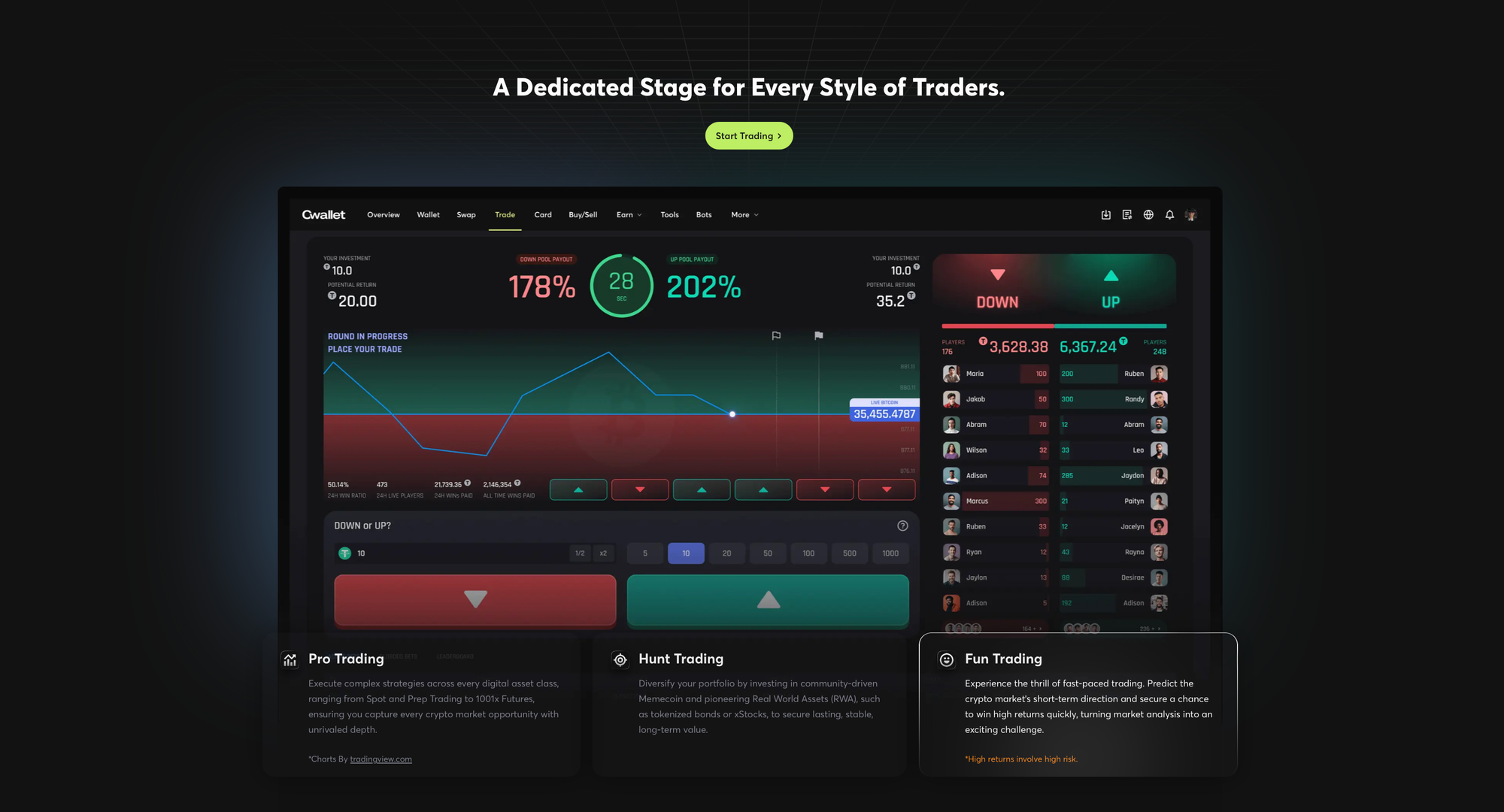
For Cwallet users, this evolution highlights the value of having multiple ways to access crypto markets. Whether you're exploring xStocks, managing assets through Spot Trading, or trading price movements with Perpetual Trading, choosing the right product structure is becoming just as important as choosing the right asset.
As blockchain continues expanding into traditional finance, flexibility across different asset classes will become an increasingly valuable advantage.
Conclusion
Tokenized stocks are entering a new stage of development, driven by growing institutional participation and expanding blockchain infrastructure.
While many products may appear similar on the surface, their underlying structures create meaningful differences in ownership rights, pricing, liquidity, and trading behavior.
NVIDIA demonstrates that identical market exposure does not necessarily translate into identical investment products.
For investors, the next phase of on-chain finance will require looking beyond ticker symbols and understanding the mechanics behind each product. As tokenized equities mature alongside decentralized trading infrastructure, informed decision-making will become a key competitive advantage.
Stay tuned for the next edition of Cwallet Weekly Crypto Express, where we continue exploring the biggest trends shaping crypto markets, blockchain innovation, and the future of digital finance.
Cwallet: Your All-in-One Crypto Solution
Cwallet allows you to store, trade, and manage 1,000+ cryptocurrencies across 60+ blockchains, offering flexibility for both Spot Trading and Futures Trading. With features like Perpetual Trading, Cozy Card, and more, Cwallet empowers you to make the most of your crypto journey.
Join the Community & Earn More
Trade daily, earn more. Cwallet's Telegram and Discord communities host regular trading challenges across Market Battle, Trend Trade, 1001X, and Tap Grid, with extra rewards waiting for active participants.
👉 Join us on Telegram or Discord to participate in ongoing events and claim your rewards.
Official Links
Official Site: https://cwallet.com
X: https://x.com/CwalletOfficial
Disclaimer
This content is for informational purposes only and does not constitute financial advice. Crypto assets are volatile, and all investment decisions should be based on your own research (DYOR). Cwallet assumes no liability for any losses.