What Is Polygon (POL)?
If you've ever used Ethereum and winced at the gas fees, you've probably heard of Polygon. It was built to solve exactly that problem — making Ethereum transactions faster and cheaper without sacrificing compatibility. But Polygon has evolved well beyond a simple fee solution, and its token has a new name.
From MATIC to POL: A Quick History
Polygon started as Matic Network in 2017, founded by a team of Ethereum developers who wanted to build a faster, cheaper layer on top of Ethereum. It rebranded to Polygon in 2021 and quickly became one of the most widely used Ethereum scaling solutions, attracting major partnerships with Starbucks, Nike, Stripe, and others.
The native token was called MATIC — but in September 2024, Polygon upgraded its token to POL at a 1:1 migration ratio. By early 2026, 99% of all MATIC had been converted. The name change wasn't just cosmetic: POL was designed to do significantly more than MATIC ever could.

What Does Polygon Actually Do?
Polygon is a Layer-2 scaling solution for Ethereum. Think of Ethereum as a busy highway — powerful but congested and expensive. Polygon runs alongside it, processing transactions faster and at a fraction of the cost, then periodically reporting back to Ethereum for security.
The result: transactions on Polygon often cost less than $0.001, versus several dollars on Ethereum mainnet. For developers building dApps, games, DeFi protocols, or payment systems, that difference is enormous.
Polygon is also EVM-compatible, meaning any application built for Ethereum can run on Polygon with minimal changes. This is why Polygon attracted such rapid developer adoption.
What Makes POL Different from MATIC?
MATIC was the gas and staking token for a single chain — the original Polygon PoS network. POL was designed to be something more ambitious: the backbone of an entire ecosystem of chains.
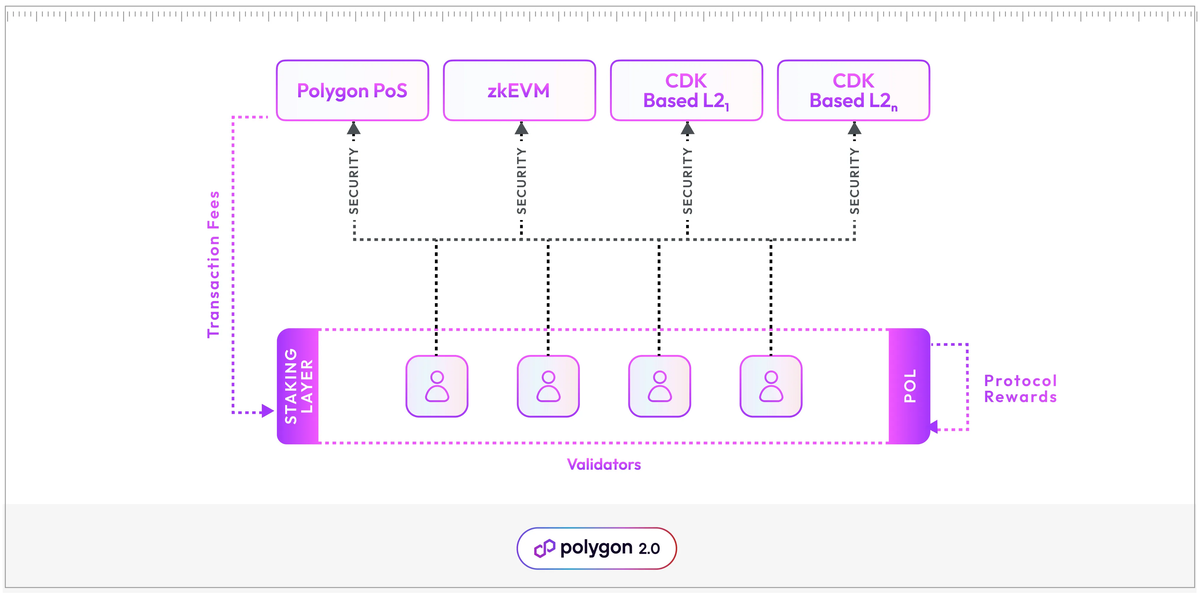
Under Polygon 2.0, the network is evolving into a collection of interconnected chains — all connected through a shared infrastructure called the AggLayer. POL powers all of them:
- Gas fees: Every transaction on Polygon PoS uses POL
- Staking: Validators stake POL to secure the network and earn rewards
- Governance: POL holders vote on protocol upgrades and treasury allocation
- Multi-chain security: As Polygon's ecosystem grows, POL is designed to secure multiple connected chains simultaneously — something MATIC couldn't do
This "hyperproductive" token design is the core of Polygon 2.0's vision: one token, many chains.
The AggLayer: Polygon's Big Bet
The AggLayer is Polygon's answer to blockchain fragmentation. Today, different blockchains operate in silos — moving assets between them requires bridges, which are complex, slow, and often risky.
The AggLayer connects all Polygon-based chains into a unified network, making cross-chain transactions feel seamless to users. In 2026, Polygon is actively expanding AggLayer to support real-world asset (RWA) settlements and institutional flows — a significant step toward enterprise adoption.
Tokenomics of $POL
Initial supply: 10 billion POL (migrated 1:1 from MATIC)
Annual emission: 2% per year over 10 years, split equally between:
- Validator rewards (1%) — to incentivize network security
- Community treasury (1%) — to fund ecosystem development and grants
This 2% inflation model replaced MATIC's older staking emissions, which ended in July 2025. Current staking APR for validators sits around 2.5–3%.
Unlike MATIC which had a fixed supply, POL's supply is dynamic — the community can vote to adjust or discontinue emissions over time.
Real-World Use Cases
Polygon isn't just theoretical. Several high-profile deployments run on the network:
- Payments: Stripe integrated Polygon for crypto payment processing
- Prediction markets: Polymarket, one of crypto's most popular prediction platforms, runs on Polygon
- Gaming and NFTs: Major gaming studios use Polygon for in-game economies due to its low fees
- Enterprise: The Polygon CDK (Chain Development Kit) lets companies build their own custom blockchain connected to the Polygon ecosystem
How Can I Have POL on Cwallet?
There are three easy ways to get and use POL on Cwallet:
Buy $POL directly. Use Cwallet's Buy Crypto feature to purchase POL with fiat. It's the simplest way to get started, with 100+ local payment methods supported.
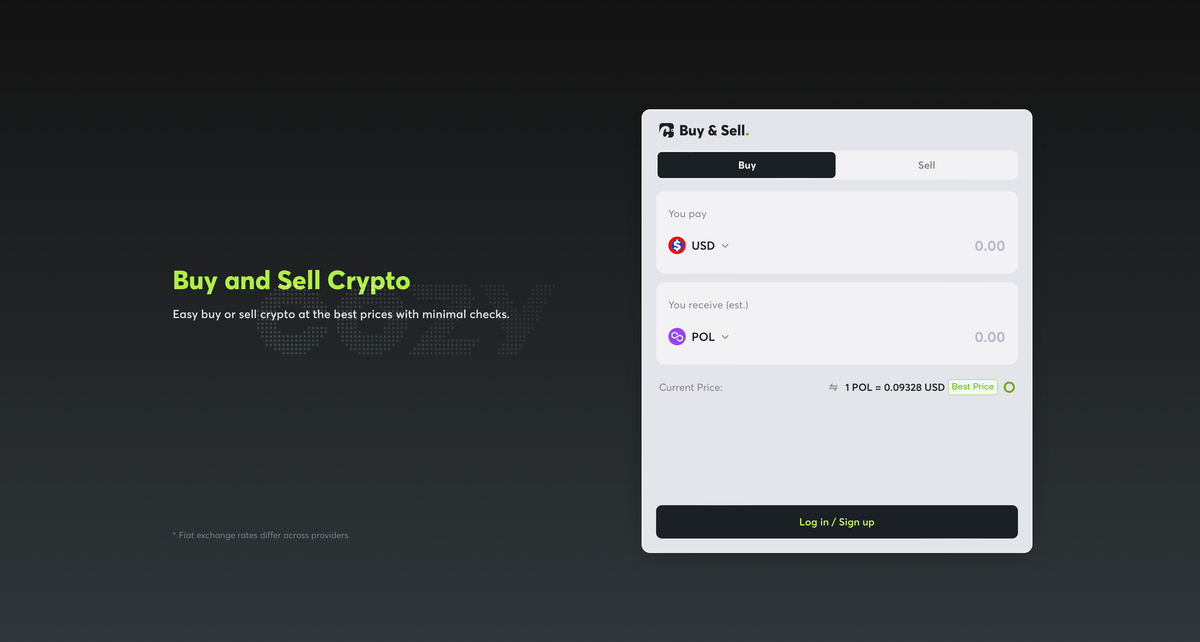
Swap into $POL. Already holding BTC, ETH, USDT, or other tokens? Use Cwallet's Swap feature to convert instantly into POL at competitive rates.

Trade $POL. POL is available for trading on Cwallet's Spot market. You can trade POL pairs directly, or use it as part of a broader trading strategy.
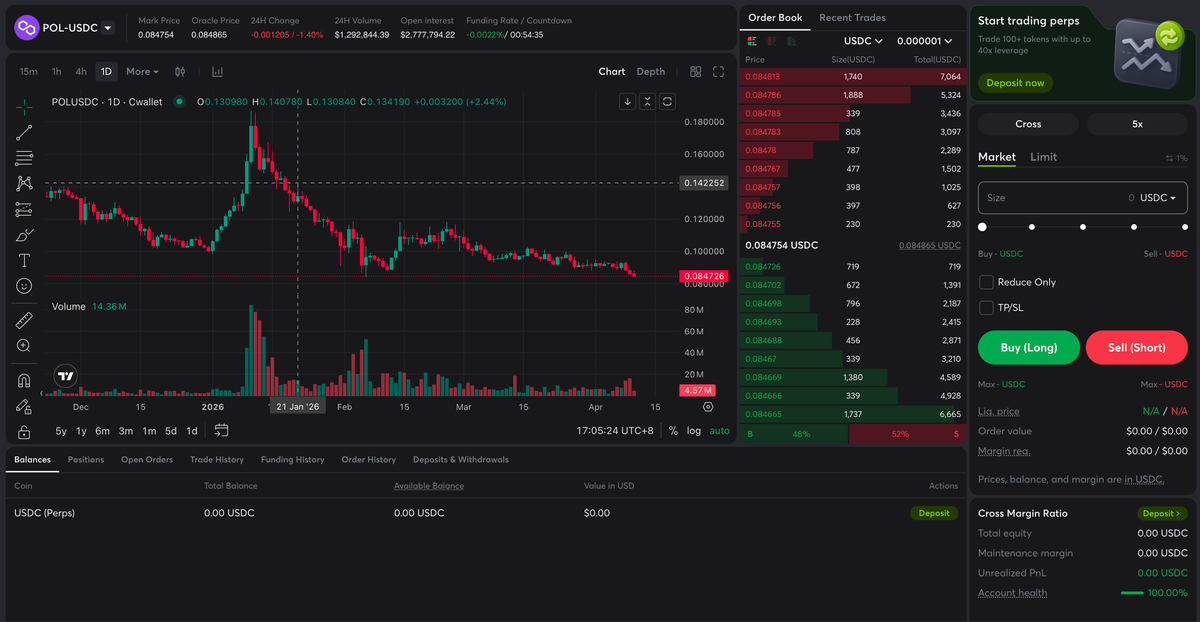
To quickly check your understanding, here is a short quiz to help you review the core concepts you’ve just read.
Quick Check-in
1. What problem was Polygon originally built to solve?A) Replace Bitcoin as a store of valueB) Make Ethereum transactions faster and cheaper ✅C) Create a completely new blockchain independent of EthereumD) Provide anonymous transactions like Monero
2. What is the main difference between MATIC and POL?A) They are identical — POL is just a rebrand with no functional changesB) MATIC secured one chain; POL is designed to secure multiple chains across the Polygon ecosystem ✅C) POL has a fixed supply while MATIC had unlimited inflationD) POL only works on Ethereum mainnet, not on Polygon's own chains
3. What is the AggLayer?A) Polygon's governance voting system for token holdersB) A tool for calculating gas fees across different chainsC) Polygon's cross-chain infrastructure that connects multiple chains into a unified network ✅D) The smart contract system that handles MATIC to POL migration
Polygon started as a simple fee solution for Ethereum and has grown into one of the most ambitious multi-chain ecosystems in crypto. The migration from MATIC to POL reflects that evolution — from a single-chain gas token to the coordinating asset of an entire interconnected network.
Whether that vision fully materializes depends on AggLayer adoption, enterprise partnerships, and how competitive the Layer-2 landscape remains. But the technical foundation and real-world usage are already there.
Disclaimer: The information in this article is for educational purposes only and does not constitute financial advice, investment advice, trading advice, or any other sort of advice. High-leverage trading involves substantial risk of loss and is not suitable for every investor. Please perform your own due diligence and never invest money that you cannot afford to lose.